Showing posts with label Strategic Collaboration. Show all posts

Sunday, July 6, 2008

Competing in the Global Economy: Why Honda Prevails.

Following is a list of why Honda dominates in the automotive industry:
1. Everyone in their "assembly" team can do everyone's else job.

2. Honda has a technological system that adapts to any car model.
3. Honda spends a great deal of time on the ground.
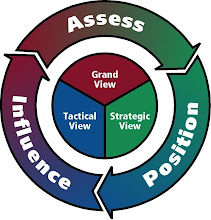
/// They always knowing what are the current and future intents of the vendors. Honda's intelligence gathering and strategic assessments protocols enable their implementers to strategize ahead.

4. They adjust strategically as a team.

/// Honda has a strategic project management process that enables the team to collaborate anywhere as a team,

Regardless of the times, Honda has a grand strategic process (a Tangible Vision) that enables them to adjust strategically. Currently, they are #1 in car manufacturing in the United States.

#

July 3, 2008

The Struggles of Detroit Ensnare Its Workers

By BILL VLASIC and NICK BUNKLEY

DETROIT Their pickups and sport utility vehicles are not selling, and now General Motors, Ford Motor and Chrysler have to pay thousands of auto workers not to make them.

With more than 15 of their assembly plants across the country set to be idled or slowed because of shift cutbacks, the Detroit automakers will temporarily lay off upward of 25,000 auto workers this summer and fall.

Because of their union contracts, G.M., Ford and Chrysler are obligated to pay workers more than half of their regular take-home wages, plus health benefits, with state unemployment benefits picking up a portion of the rest.

Despite cutting more than 100,000 jobs since 2006 through buyouts and special retirement programs, the Detroit companies still cannot match their production capacity with their steadily declining market share.

Consumers are shifting to more fuel-efficient vehicles, if they are stepping into a showroom at all. New vehicle sales plummeted 18 percent in June, and Detroit's share of the declining market fell to a combined 46 percent.

Moreover, all three companies are losing money in North America and burning through cash reserves. On Wednesday, G.M.'s stock fell 15 percent after a Merrill Lynch analyst issued a report saying that "bankruptcy is not impossible" if the overall market continues to deteriorate.

Unlike many factories operated by Japanese manufacturers in the United States, Detroit's plants are not flexible enough to switch their production to better-selling models.

So while some G.M. and Ford factories are scrambling to build more cars, even paying workers overtime to meet demand, other assembly lines are shutting down.

"It's an unprecedented situation," said Harley Shaiken, a labor professor at the University of California, Berkeley. "Despite enormous reductions in total employment, the market is forcing massive temporary layoffs."

Detroit's Big Three, it appears, can't escape their past.

Since the 1980s, the companies by dint of their contracts with the United Automobile Workers union have parked idled workers in so-called "jobs banks" where they received full pay while doing community service or simply clocking in.

New contracts with the U.A.W. signed last year were supposed to pave the way for elimination of the jobs banks and make the companies more competitive on health care and wages for new hires.

In addition, the historic buyout and early-retirement programs were meant to better align, at enormous expense, the automakers' workforce with demand for its vehicles. Even before this year, the companies had announced plans to close several plants.

But the restructuring plans did not account for the huge drop in sales and the shift by consumers to smaller vehicles that have resulted from soaring gas prices and the weak economy.

"You have the demand for large vehicles dropping, combined with growing demand but limited supply of smaller vehicles," said Jesse Toprak, executive director of industry analysis for Edmunds.com, an automotive-research Web site. "What you end up with is miserable sales numbers."

Rather than flood the market with unwanted trucks and S.U.V.'s, the Detroit automakers have announced broad, temporary layoffs on a scale unseen since the early 1990s.

"Instead of building vehicles and selling them at deep discounts, the companies are shutting the plants," said Ron Harbour, managing partner of the consulting firm Oliver Wyman, which issues a widely followed annual report on auto manufacturing trends. "It's painful, but it's smarter than the alternative."

G.M. plans to send about 11,000 United States workers home on layoffs the rest of the year, some for weeks and others for months. It also has about 1,000 workers still on the rolls of jobs banks from plants long since closed.

Ford is idling about 5,000 of its hourly employees, in addition to the estimated 500 workers it has in the jobs bank. Chrysler, which has 300 people in the jobs bank, will lay off about 9,500 workers.

There are also layoffs scheduled at plants in Canada and Mexico.

Virtually all of the laid-off workers are at plants building slow-selling pickups like the Ford F-Series or big S.U.V.'s such as G.M.'s Chevrolet Suburban and Chrysler's Dodge Durango.

Some of those workers will, over time, be moved to car plants that are adding shifts or otherwise increasing production.

But the vast majority of the laid-off workers in the United States will stay at home and collect 95 percent of their average after-tax, take-home pay about $816 a week, according to U.A.W. documents posted on the union's Website.

Of that $816, the automaker pays about 55 percent and state unemployment covers the remainder. In G.M.'s case, the cost of supporting 11,000 laid-off workers averages about $1 million a day.

"It is a very expensive issue, but it's not the critical one for Detroit," said Mr. Shaiken. "The reason these plants are going down is that some catastrophic decisions were made in the past to continue building so many trucks."

The companies are trying to mitigate the impact of the production changes. Ford, for example, will cut a shift at its Missouri truck plant and almost immediately move the workers to a nearby factory making small S.U.V.'s.

At a Kentucky plant that makes Explorer sport utility vehicles, Ford will slash production from two shifts to one. But rather than lay off workers, the shifts will start to alternate work weeks.

Still, the Detroit automakers are hamstrung by the inability of their factories to shift production from slow-selling vehicles to hotter models. Rivals such as Honda can quickly move from making an S.U.V. such as the Element in its Ohio plant to Civic sedans.

"The key is they are able to change the mix of products to what is selling right now," said Mr. Harbour.

While plants operated by G.M., Ford and Chrysler have markedly improved their productivity and lowered their worker rolls in recent years, they generally are confined to making variations on a single truck or car platform.

The stunning drop in truck sales has forced the Detroit companies to make some hard decisions. Chrysler this week said it will close a minivan plant in Fenton, Mo., near St. Louis, and cut a shift at a neighboring factory that makes Ram pickups.

The double blow stunned workers. About 1,500 workers at the minivan plant will go on indefinite layoff in October, while 900 workers at the Ram factory will be idled in September.

"It's very scary," said Joe Wilson, a 40-year-old worker at the minivan plant. "We'd been led to believe we'd have a future. Now they pull the rug out from under us."

Mr. Wilson said that getting a paycheck for not working is hardly a relief when his job is disappearing. He was already cutting back on expenses, and had bought an old Ford Escort to save money on gas for his commute.

"It takes three weeks to get that first check and by then we owe everybody and their uncle," he said.

A worker at the Ram pickup plant, Dave Jacobs, said the plant's long-term prospects have been clouded by the reduction to one shift.

"They can't afford to run this place with one shift," he said. "One shift pays the bills and the others are for profits."

Laid-off workers can receive their unemployment pay for up to 48 weeks. At that time, workers can shift into the jobs bank for another two years.

But one Chrysler worker, Andy Marlow, said the cutbacks are coming so fast that employees fear the worst.

"You can sit and try to ride it out and hope the plant comes back up," said Mr. Marlow. "But then if that pay runs out, you're unemployed."

Bill Vlasic reported from Detroit, and Nick Bunkley from Fenton, Mo.
http://www.nytimes.com/2008/07/03/business/03auto.html

--- eof


If your company needs a strategic collaborative management process that enables your team to collaborate anywhere as a team regardless of the distance, the technology and the project culture.

Please contact us at service [aatt] collaboration360 [dottt] com. We have a white paper ready for your reading.

Sunday, April 27, 2008

The State of Work in the 21st Century

Regardless of some people's inclination to work as a high-tech nomads, they need to collaborate as a team

The most difficult challenge for people working in a virtual team scenario is collaborating as a team. Regardless of the talent of the team and the technology, it is about having a grand strategic process that enables the team to collaborate as a team.

From reading history, we all know that a group of individual superstars do not always operate as a team. It is the team of team players that usually finish the project. Every championship sport team usually credit their success to sound and solid teamwork.


In order to building a successful team of team players, one begins by developing trust, collaboration and accountability while building and connecting with a bigger picture. We call it this big picture the "Tangible Vision".

To collaborate through the Tangible Vision, a team must learn our "Compass AE" process.

If you are interested in knowing more about getting your team to collaborate as a team , please contact us at Service[aatt]collaboration360 [ddott]com.

We will be more than happy to tell you more about our process and how it can help your company to produce more.


###

Labour movement

Apr 10th 2008
From The Economist print edition


Illustration by Bell Mellor

The joys and drawbacks of being able to work from anywhere

THREE years ago Pip Coburn left his job as an analyst at UBS, a global bank, in order to start his own investment consultancy, Coburn Ventures. At his first staff meeting, in a Manhattan café, he and his five colleagues drew up their to-do list. The most urgent item, everybody agreed, was to get BlackBerries. Then they needed to start contacting clients. And at some point they should probably find some office space, ideally in the chic area around New York's Union Square.

Within three days they had their BlackBerries and were pitching their offerings to fund managers. That went well and kept everybody busy. All six were roaming around the city and country, working from wherever they pleased and meeting clients either virtually—via e-mail, phone or instant messaging—or physically wherever the clients preferred. “No client ever even asked me whether we had an office,” says Mr Coburn, “so the office space never rose to the top of the agenda.”

Eight months later, with seven employees now, Mr Coburn brought up the issue again, at another breakfast meeting in a café. He asked if anybody still wanted an office at all. One thirtysomething woman, with two kids and a nanny at home, felt that she might like a quiet office as an option. But the others—all in their 30s except for two fortysomethings, including Mr Coburn—were now against it. “We had learned to love the freedom and autonomy,” says Mr Coburn. So Coburn Ventures remains a “virtual firm”.

That changes the way its employees live. While at UBS, Mr Coburn got up at precisely 5.08am on weekdays in order to catch a commuter train into Manhattan that would allow him to be at his cubicle by 6.45 and in a conference room at 7.00. “I never saw my kids in the morning,” he recalls. Now he wakes up at 6.15, does half an hour of yoga, kisses his three children and then turns on his BlackBerry. Usually he works at home or in cafés with Wi-Fi in his suburb of Westchester. When he goes into Manhattan, it is for specific meetings and at off-peak times. He also works from his second home in Maine and uses the five-hour drive for “wonderful, free conversations” on his earpiece.

Nomadism works, he says, because everybody on his team is “conscientious and self-motivated”. But it did take some adjusting. At first the team's communications became more “transactional”—efficient but impersonal. Once a terse e-mail led to an awkward misunderstanding. And without the proverbial water cooler, there was “no space for casual serendipity”, says Mr Coburn. But these drawbacks were easy to fix. His team now gets together regularly for fun, as if they were a clique of college friends. The group has become closer than any he has ever been part of, says Mr Coburn, and everybody has a “deeper connection to the organisation”.

/// The deep connection of camaraderie depends greatly on the corporate culture.

James Ware, a co-founder of the Work Design Collaborative, a small think-tank, says that nomadic work styles are fast becoming the norm for “knowledge workers”. His research shows that in America such people spend less than a third of their working time in traditional corporate offices, about a third in their home offices and the remaining third working from “third places” such as cafés, public libraries or parks. And it is not only the young and digitally savvy. At 64, Mr Ware considers himself a nomad, and accesses the files on his home computer from wherever he happens to be.

Today's work nomadism descends from, but otherwise bears little resemblance to, the older model of “telecommuting”, says Mr Ware. That earlier concept became popular in the 1990s thanks to cheap but stationary telecommunications technologies—the landline phone, the fax and dial-up internet. Because it still tied workers to a place—the home office—telecommuting implicitly had people “cocooning at home five days a week”, he says. But people do not want that: instead, they want to mingle with others and to collaborate, though not necessarily under fluorescent lights in a cubicle farm an hour's drive from their homes. The crucial difference between telecommuting and nomadism, he says, is that nomadism combines the autonomy of telecommuting with the mobility that allows a gregarious and flexible work style.

This new model of nomadic work has become technologically feasible only very recently. Mike Lazaridis, the founder of Research In Motion and inventor of the BlackBerry, the firm's main product, says that his device “freed you from your desk” just when globalisation seemed to require many office workers to put in 24 hours, seven days a week. “The BlackBerry didn't cause globalisation, but it helps you manage the reality of it. We wanted you to have a life,” he says.

Wi-Fi hotspots have been equally crucial, as have many relatively obscure innovations, such as IMAP, the “internet message access protocol”. It synchronises e-mail across mobile phones, computers and web mail so that the user encounters the same in-box no matter which device he uses. PDF, the “portable-document format”, became a universal standard for producing, sharing and archiving anything that used to require paper. “Cloud computing” increasingly lets people keep their documents online rather than on one particular computer.

With the old technological hassles thus mostly conquered, the new questions tend to be sociological. Wes Boyd has worked nomadically for the entire decade since he co-founded MoveOn.org, a leftish organisation for political activism in America, and attributes his “great family life” to this style of work. But as MoveOn.org grew to about 20 staff, thousands of consultants and millions of volunteers, he also realised that “there can't be any clumps of people in physical offices” because they might turn into cliques or “power centres”. In an effective organisation, “there mustn't be insiders and outsiders,” he says. So he made it a rule that no two people anywhere may share a physical office.

Instead, all of his colleagues are “virtually co-present” throughout the day, says Mr Boyd, pointing to the instant-messaging “buddy list” on his computer screen, which shows who is available and who would rather not be disturbed. Instead of wasting time in pointless physical meetings, he gets most issues resolved with constant and quick electronic communications, arranged ad hoc rather than scheduled in advance. As a result his staff are more “purpose-driven” and less obsessed with relationships, which improves the quality of their work, he says.

Conflicts arise only when both models, the old culture and the new, collide or overlap, he says. This usually happens in Washington, DC, where Mr Boyd has a lot of business. In the government bureaucracies he visits, workers still have assistants who “structure their time” so that it can take a week to arrange a meeting to resolve a mundane detail. Yet these same workers are now also expected to do “ad-hoc flexible scheduling”, which tears them apart. “In physical meetings, they are the ones looking at their BlackBerries under the table,” says Mr Boyd.

Larger organisations often do not have the option of dispensing with offices entirely, as Coburn Ventures and MoveOn did. So they need to manage a mixed system of work cultures. At Sun Microsystems, a company that makes hardware and software for corporate datacentres, more than half of the workforce is now officially nomadic, as part of a programme called “open work” in which employees have no dedicated desk but work from any that is available (called “hotdesking”), or do not come into the office at all.

That has not, however, created the coteries that Mr Boyd fears. “It's naive to think that the physical infrastructure has anything to do with power,” says Jonathan Schwartz, Sun's chief executive. His experience with nomadism is entirely positive. Sun's workers love the flexibility, stay with the firm longer and are more productive.

Mr Schwartz himself leads by example. He usually carries only his BlackBerry and works from “anywhere that has Wi-Fi”. He has an assistant who manages his diary (“she recently put her foot down and has forbidden me to modify what she puts in”) so that “150% of my time is structured.” The difference is that he now rarely sees her, and that the venues for his scheduled meetings are flexible. He conducts many on Skype, a free internet-telephone service, or in person at cafés. “Time provides the structure, location takes care of itself,” he says. He is now planning to get rid of his physical office entirely; Sun's top lawyer has already done so.

Mr Schwartz, like Messrs Boyd and Coburn, has also noticed that he is having fewer “flesh meetings”. This runs counter to the conventional wisdom of the past few decades, which held that improvements in telecommunications always lead to more physical travel, rather than less. Mr Schwartz used to spend two weeks a month travelling to meet customers; that has come down to less than one week a month. With more than 100,000 customers, he finds that he communicates far more efficiently through his blog, which is translated into ten languages and “on a good day reaches 50,000 people.” When he travels, it is now largely for cultural reasons—his Asian customers, in particular, still find physical meetings reassuring. But in general he finds that “face-to-face is overrated; I care more about the frequency and fidelity of the communication.”

/// In our beta test, we discovered when a Compass team builds and connects with their Tangible Vision, they determines the people who they can trust to complete their objective and will collaborate as a team player. If the team connects with their well-defined Tangible Vision and each other. It means they believe in the plan and themselves. They are motivated as a team. Good things originate from within.

A well defined goal and plan determines the leadership, not the other way around. If the team believes in it, there is a good chance that they will do their best to complete the goal as a team.
The team has to believe in the aspiration (the goal of the Tangible Vision) and the quality of their teammates before they are inspired to do more. The bottom line is that the team will collaborate well as a team. This is the essence of the Compass AE process.

Still, nomadic work requires other big adjustments in the culture of an organisation and the behaviour of its individuals, says Mr Ware of the Work Design Collaborative. He finds that older and more traditional supervisors usually oppose the idea because they fear that they cannot manage people whom they cannot see. With time, they usually change their minds, says Mr Ware; but this requires “management by objectives rather than face time”. Not all workers thrive in such a culture; some prefer the structure of the traditional office. But “anyone who did well at college can work well this way,” he thinks. “The prof said 'paper by Friday' but didn't care where you did it; it's the same now.”

The bigger problem is stress. Nomadic work means more autonomy, but “anybody who works for himself has a tyrant as a boss,” says Paul Saffo, the Silicon Valley trend-watcher. “The danger is that the anytime, anyplace office will lure us into the tiger cage that is the everytime, everyplace office.” BlackBerries and their kin have already caused marital problems for many couples, who must negotiate whether the gadget is allowed, say, in the bedroom or on the beach while on holiday. Severe addicts pretend to go to the lavatory at home just to check their e-mail. An office worker's day used to stop when he left the office. When does a nomad's working day stop?

Illustration by Bell Mellor

James Katz, a professor at Rutgers University who leads a research centre on the sociology of mobile technologies, says that the shift amounts to a “historical re-integration” of our productive and social spheres. In the hunter-gatherer, agricultural and pre-industrial artisan eras people did not separate the physical space devoted to work, family and play. Blacksmiths, say, worked from their homes, with family and village life all around. It was only with the capital-intensive work of the industrial era that a separation of homes and factories became necessary, because workers “had to be co-located” in order to work efficiently. This also applied to bureaucracies before the digital era. Now, however, the different spheres of life are merging again.

This leads to more pressure, says Mr Katz. The difference between the integration of work and family in pre-industrial times and today is that in the old days there were clear limits on personal productivity and now there are not. Today “people judge what they should achieve by what they could achieve,” says Mr Katz, and with our new technologies we can always theoretically achieve more. People thus “feel inadequate compared with the enormous opportunity they have”.

The optimists counter that all it takes is a bit of self-discipline and perspective to overcome that anxiety. Mr Ware advises his clients to draw clear boundaries of etiquette. He has an agreement with his own business partner in another time zone that they not bother each other out of hours. Sun's Mr Schwartz has an iron rule that he spends two hours after work “rolling around on the floor” with his two sons before returning to his gadgets. Mr Coburn admits that work and family are “all one big blur” but likes it that way. Mr Saffo and his wife ban all gadgets during dinner by candlelight.

Almost all the sociologists and psychologists in academia, however, take a more pessimistic view. Sherry Turkle, a professor at the Massachusetts Institute of Technology (MIT) who studies the psychology of gadget use, believes that the addicts, often called “CrackBerries”, are “watching their lives on that little screen and can't keep up with it”, leaving them permanently anxious.

Rutgers' Mr Katz argues that the “frenzy is only going to get worse.” This is, first, because of “random reinforcement”, the desultory pattern of rewards that comes with addictive behaviours such as gambling. A CrackBerry winnows through his e-mail throughout the day, knowing full well that most of it is chaff, but cannot help himself because of that occasional grain.

The second reason, says Mr Katz, is that most people suffer from the illusion that more information always leads to better decisions, and there is always more information available on our phones and laptops.

/// When there is too much information, the non-Compass team faces paralysis by analysis. Concurrently, they also have no strategic insights of their project when there is not enough information. The specifics of the Tangible Vision enable the Compass team to focus on the grain of the informational flow, not the chaff.


The third reason is that “people today need to do constant impression-management,” because the mere ability to stay connected during weekends, vacations or sabbaticals means that going offline risks reminding others that we are expendable
.

The flexibility, freedom and productivity of mobile work thus have a cost. Nomads are constantly juggling the social rights of colleagues, relatives and friends, as well as their own right to downtime. All of this, moreover, now tends to happen in public places that were not built specifically for work, in the way offices were. The next article looks at how that affects those kinds of places.

http://www.economist.com/specialreports/displaystory.cfm?story_id=10950378

# # #


Sunday, March 9, 2008

Cooperation Creates Collaboration


Our Compass AE team collaborative process enables your project team to be strategically positioned ahead of the competition.

The following actions occurs:
  • The team knows the critical path toward completing the goal
  • The team focuses on their strengths while avoiding their weaknesses
  • The team always anticipate or seize opportunities
  • The team always know how to strategically adjust to changes
  • The team knows how to properly shape the path that leads to the completion of the project.
  • The team know how to strategically collaborate.
Our Compass AE process enables your project team to collaborate anywhere regardless of the distance, the technology and the project culture. With a compass direction, they collaborate without borders.

If you are interested in knowing more about Compass AE as a strategic collaborative tool. please e-mail us at Service[aatt]collaboration360[ddott]com


#

Following is an Interesting article on cooperation and gaming collaboration.

Cooperative games get casual players involved

Thursday, March 6, 2008

"... developers create more games that invite people to play collaboratively. Army of Two is the first next-generation title to be built from the ground up with cooperative play in mind, which runs through the bloody story line.

Much like Facebook and MySpace have rocketed in popularity through their focus on community and collaboration, a new generation of console games is offering more opportunities to create social modes of interaction. Unlike the solitary experience of playing a game by yourself or the high-stress environment of playing competitively with other players online, co-op offers an easier way to get into video gaming because you're among friends.

"Competition is fun, but it's just as fun to do teamwork," said Nick Puleo, founder of Co-Optimus, a Web site devoted to cooperative gaming. "Co-op is more of a positive thing than going around and killing the other team. It's built around a story or an objective that you can accomplish together."

Video gaming has had elements of co-op play for years. Two decades ago, arcade rats were playing Double Dragon and Contra side by side. With earlier consoles, gamers played on split screens on their televisions. More recently, hardcore PC gamers have banded together in online games like World of Warcraft to create epic battles and embark on various missions.

But in the past couple of years, there has been a co-op renaissance as developers started building the feature into their games, this time with online play so friends can team up remotely. Gears of War, Rainbow Six: Las Vegas and NHL 08 have utilized co-op to good effect. Upcoming titles like Resistance 2, Fable 2 and Haze are all building in more dynamic co-op features that allow up to eight players to work together.

One of the best-known titles in this new crop of co-op games is Rock Band, a four-player music game in which people play as members of the band. Greg LoPiccolo, vice president of product development at Harmonix Music, the developer of Rock Band, said the style of the game and its cooperative play have helped the company not only sell 1.5 million copies in the past few months but also reach out to a broader audience.

"There is a whole vast audience, specifically women, for whom competition is not their main desire for entertainment," LoPiccolo said. "Rock Band has been a good fit for them. From the outset, we hoped we would pull in a new set of customers who don't think of themselves as gamers."

Building co-op features into games isn't as simple as just adding a character. In Army of Two, the developers went to great lengths to ensure that both players can roam separately but
also work well in concert.
That can be harder in story-based games, where one player's progress will set off events in the game. In Army of Two, designers had to be mindful of tracking two players, ensuring their independent movements still work within a linear story line.


/// With Compass AE, each team member always knows what the entire team is focused on. When a Compass team that builds, connect and lead with their Tangible Vision, they will always succeed.


The game also forces players to revive each other, work in tandem to move around, and cover each other during firefights. When done well, the game can be rewarding for friends who are playing only recreationally, said Reid Schneider, senior producer for Army of Two at Electronic Arts.

"It's almost like watching a football game with a buddy as opposed to trying to compete with other," Schneider said. "It's a different experience with different expectations. This is more about the core enjoyment of playing together."

In Rock Band, designers allowed players of different skill levels to play with each other. But if one player falls behind and is on the verge of ending the band's collective round, a star player can save a bandmate through the use of stored "overdrive power."

"That can be really rewarding, if you're struggling and then you have a bandmate rescue you," LoPiccolo said.

Ted Price, president and CEO of Insomniac Games, which is releasing Resistance 2 this fall, said co-op can bring new gamers further into the gaming world. He said games like Resistance 2, which will feature eight-person co-op play, can prepare people for more intense multiplayer battles online.

"We think co-op can serve as a bridge between single player and multiplayer," Price said. "It's not about getting your butt kicked in multiplayer (games). We're introducing multiplayer concepts in a more safe way."

Peter Moore, president of the EA Sports label, said he believes co-op can draw players into games they might have thought were too daunting, such as shooters or sports games like NHL 08 or FIFA 08. By teaming with stronger players, new players can not only have fun but gain confidence, he said.

He said the co-op play was one of the nice features of Gears of War, a title published by Microsoft when he was vice president of Microsoft's gaming business.

"In Gears, you had each other's back and you took care of each other," Moore said. "Even if you were weaker, you could last longer and have more fun."

E-mail Ryan Kim at rkim@sfchronicle.com.

http://www.sfgate.com/cgi-bin/article.cgi?f=/c/a/2008/03/06/BU24VEBTK.DTL

This article appeared on page C - 1 of the San Francisco Chronicle

###

Monday, October 15, 2007

Great Teams are More Productive


A good reminder on why teamwork is important.

# # #
September 12, 2007


Mathematical proof that teams are more productive

Dear Bob ...

I liked this weeks' Keep the Joint Running ("The causes of greatness," 9/10/2007).

You have an assertion - that good employees who work together as a team outperform great employees who don't.

For a very long time I've been looking for a reference that provides some/any evidence for this, apart from anecdote or assertion.

Do you know any sources that show teams are more productive and creative?

I've read a heap of Jerry Weinberg's & friends work - this is one of their major planks. I believe it to be true,
from my own experience, both negative and positive, I know it to be true, but haven't been able to find any hard/definitive evidence.

- Teaming with curiousity

Dear Teaming ...

Nope. Like you, all I've heard is assertion and anecdote. Seems to be a chronic problem in the business press, doesn't it?

Looking at professional sports is the usual way to assess this. Of course, you then have to decide which sport to look at.

In the Ryder Cup, it's pretty much about which "team" has the great players.

In football, though, teamwork is essential or your star quarterback will still get creamed. (On the other hand, try asserting that the Packers without Brett Favre would still have won the Superbowl a few years back because they had teamwork. Not very convincing, is it?)

In the end, I think this is what mathematicians would call a "Q.E.D." situation. When work processes require cooperation among employees, those who know and trust each other will be able to spend more time and energy doing the work and less questioning and challenging each other. While we'd need actual evidence to compute exactly how much less time, the principle seems pretty solid based on the logic alone.

- Bob

http://weblog.infoworld.com/lewis/archives/2007/09/mathematical_pr.html?source=NLC-ADVICE&cgd=2007-09-12


The causes of greatness
9/10/2007

ManagementSpeak: Thanks to your superhuman effort we dodged a bullet.
Translation: Your job is now to dodge one bullet per week.
This week's contributor asked to remain anonymous, possibly due to a need to engage in bullet-ducking.

Depending on the business expert I'm listening to and the day of the week, I know three truths:

1. Good employees who work together as a team outperform great employees who don't.

2. Good employees with great processes outperform great employees with bad processes.

3. If an employee is irreplaceable you should immediately fire that employee.

From first-hand observation I know that when it comes to Information Technology organizations:
  • Great employees can and do overcome bad processes.
  • Great employees can and do overcome lousy managers.
  • Great employees can and do pull along mediocre teams.
  • Making one or two great hires is the most critical step in turning around an underperforming organization.
  • Well-designed processes can be pretty useful, too.
Which is to say, if you want an organization that works, you'll get more leverage from hiring great employees than from any other single effort you can undertake.

Great employees can overcome organizational deficiencies to deliver useful results. They can't, by themselves deliver a great organization. That takes a lot more.

The question of what makes a great organization tick is rife with superficial thinking. The usual approach is what you might call the "Tom Peters Fallacy":

  1. Find a great organization.
  2. Identify a trait in that organization you like.
  3. Decide that this trait is what makes that organization great.
  4. Declare that this trait is the panacea for all other organizations.

As far as I can determine, there is no one characteristic that by itself can make an organization great.

Well, okay -- there is one: excellent leadership. That only works because I define "excellent leadership" as "Doing everything required to build a great organization," thereby begging the question.

So ... what is required to make an organization great, as opposed to simply functioning?

Leadership: A great organization does start with strong leadership, in a non-question-begging way. If there's no direction -- no focus, no goals, no plan, no definition of excellence, no clearly stated expectations for employees to live up to; no alignment of purpose and standards -- the employees will keep things going, but not much more than that.

Great employees: Not every employee has to be a superstar, although all must be competent. Great organizations do need enough top-notch performers to demonstrate that high standards are achievable, not theoretical.

Focus on achievement: The definition of "great employee" has been diluted through too many managers reading about "emotional intelligence." Employees who are focused on getting along will concentrate on how irritating their colleagues are. Employees who are focused on achievement will value their colleagues' contributions and ignore their eccentricities.

Teamwork: Just as the definition of "great employee" can't ignore the importance of serious technical ability, it also can't ignore the importance of working and playing well with others, and of providing leadership in the trenches.

Willingness to innovate: This is IT we're talking about. Information technology. The field where if you can buy it, it is obsolete by definition. IT organizations and everyone who works in them must be willing to try new technologies, processes and practices ... and even more important must be driven to constantly find improvements to the ones already in production ... or they stagnate.

Willingness to not innovate: "State of the art" means "doesn't work right yet." Most of the time, the work required of IT is best achieved by extending what you have, not by chasing whatever is being hyped in this year's press releases, aided and abetted by publications hungry for advertising revenue.

Evidence-based decision-making: Great organizations make decisions through the use of evidence and logic, not wishful thinking and listening to one's intestines.

You'll note the usual buzzwords are notably absent. Governance, ITIL, CMM and all the other processes and practices (I used to call them Processes and processes) that are supposed to lead to inexorable success don't, in fact, lead to excellence.

Excellent IT organizations do have them. Even more important, they are kept in their proper place -- as useful tools that help employees be as effective as possible.

The best woodworkers have band saws, coping saws, lathes and routers in their workshops, and not just hammers and chisels, but their tools aren't what make them the best.

Great IT organizations are the same. They practice good governance; follow consistent application maintenance, enhancement, design and testing methodologies; adhere to clearly defined change control procedures; and otherwise avoid making things up as they go along.

Their processes and practices are important. They are, however, merely the signs of a great IT organization.

They are not its cause.

http://www.issurvivor.com/ArticlesDetail.asp?ID=631

Thursday, October 11, 2007

Compass AE: Communicate to Collaborate


Do you ever get messages that confuse you?

Do you ever get projects where the goal and objectives are vague and disconnected?


It is so difficult to thrive if the team's goal and objectives are vague. How can a team ever collaborate effectively when they spent most of the time arguing over the meaning of words?

When reviewing the content of their Tangible Vision, the Compass team eliminates the vagueness by agreeing the specifics of each significant word.

"The team that collaborate to communicate" will succeed over "the team that communicate to collaborate".

###

October 7, 2007
Preoccupations
E-Mail Is Easy to Write (and to Misread)
By DANIEL GOLEMAN

AS I was in the final throes of getting my most recent book into print, an employee at the publishing company sent me an e-mail message that stopped me in my tracks.

I had met her just once, at a meeting. We were having an e-mail exchange about some crucial detail involving publishing rights, which I thought was being worked out well. Then she wrote: "It's difficult to have this conversation by e-mail. I sound strident and you sound exasperated."

At first I was surprised to hear I had sounded exasperated. But once she identified this snag in our communications, I realized that something had really been off. So we had a phone call that cleared everything up in a few minutes, ending on a friendly note.

The advantage of a phone call or a drop-by over e-mail is clearly greatest when there is trouble at hand. But there are ways in which e-mail may subtly encourage such trouble in the first place.

This is becoming more apparent with the emergence of social neuroscience, the study of what happens in the brains of people as they interact. New findings have uncovered a design flaw at the interface where the brain encounters a computer screen: there are no online channels for the multiple signals the brain uses to calibrate emotions.

Face-to-face interaction, by contrast, is information-rich. We interpret what people say to us not only from their tone and facial expressions, but also from their body language and pacing, as well as their synchronization with what we do and say.

Most crucially, the brain's social circuitry mimics in our neurons what's happening in the other person's brain, keeping us on the same wavelength emotionally. This neural dance creates an instant rapport that arises from an enormous number of parallel information processors, all working instantaneously and out of our awareness.

In contrast to a phone call or talking in person, e-mail can be emotionally impoverished when it comes to nonverbal messages that add nuance and valence to our words. The typed words are denuded of the rich emotional context we convey in person or over the phone.

E-mail, of course, has a multitude of virtues: it's quick and convenient, democratizes access and lets us stay in touch with loads of people we could never see or call. It enables us to accomplish huge amounts of work together.

Still, if we rely solely on e-mail at work, the absence of a channel for the brain's emotional circuitry carries risks. In an article to be published next year in the Academy of Management Review, Kristin Byron, an assistant professor of management at Syracuse University's Whitman School of Management, finds that e-mail generally increases the likelihood of conflict and miscommunication.

One reason for this is that we tend to misinterpret positive e-mail messages as more neutral, and neutral ones as more negative, than the sender intended. Even jokes are rated as less funny by recipients than by senders.

We fail to realize this largely because of egocentricity, according to a 2005 article in the Journal of Personality and Social Psychology. Sitting alone in a cubicle or basement writing e-mail, the sender internally "hears" emotional overtones, though none of these cues will be sensed by the recipient.

When we talk, my brain's social radar picks up that hint of stridency in your voice and automatically lowers my own tone of exasperation, all in the service of working things out. But when we send e-mail, there's little to nothing by way of emotional valence to pick up. E-mail lacks those channels for the implicit meta-messages that, in a conversation, provide its positive or negative spin.

On the upside, the familiarity that develops between sender and receiver can help to reduce these problems, according to findings by Joseph Walther, a professor of communication and telecommunication at Michigan State University. People who know each other well, it turns out, are less likely to have these misunderstandings online.

These quirks of cyberpsychology are familiar to Clay Shirky, an adjunct professor in New York University's interactive telecommunications program. His expertise is social computing - software programs through which multiple users interact, ranging from Facebook to Listservs and chat rooms to e-mail. I asked Professor Shirky what all of this might imply for the multitudes of people who work with others by e-mail.

"When you communicate with a group you only know through electronic channels, it's like having functional Asperger's Syndrome - you are very logical and rational, but emotionally brittle," Professor Shirky said.

"I'm part of a far-flung distributed network that at one point was designing a piece of software for sharing medical data; we worked mostly by conference calls and e-mail, and it was going nowhere. So we finally said we'd all fly to Boston and get together for two days, just sit in a room and hash it out."

During that meeting, the team got an enormous amount of work done. And, Professor Shirky recalls, "because the synchronization by e-mail was so much better after the face-to-face piece, we actually hit the launch date."

He proposes that work groups whose members are widely dispersed but need to have high levels of coordination - say, a computer security team protecting a global bank - do not have to assemble everyone in one room to reap the same benefit. Instead, he suggests a "banyan model," after the Asian tree that puts down roots from its branches.

In this approach, he said, "you put down little roots of face-to-face contact everywhere, to strategically augment electronic communications."

Professor Shirky advised the I.T. head of a global bank to gather together one representative from disparate cities for a day or two and complete tasks. That way, when the security group in Singapore gets e-mail from the security people in London, someone will be more likely to know the sender, and sense how to read the information with less risk of misconstruing or discounting it.

CONSIDER, too, the "e-mail the guy down the hall" effect: as the use of e-mail increases in an organization, the overall volume of other kinds of communication drops - particularly routine friendly greetings. But lacking these seemingly innocuous interactions, people feel more disconnected from co-workers. This was noted in an article in Organizational Science almost a decade ago, just as e-mail was starting to surge. Saying "Hi," it turns out, really does matter; it's social glue.

As Professor Shirky puts it, "social software" like e-mail "is not better than face-to-face contact; it's only better than nothing."

Daniel Goleman is the author of "Social Intelligence: The New Science of Human Relationships" (Bantam). E-mail: preoccupations@nytimes.com.

Copyright 2007 The New York Times Company
###

http://www.nytimes.com/2007/10/07/jobs/07pre.html

Tuesday, October 9, 2007

Typical Project Management Outcome


When the actual outcome does not match the planned outcome, the management or the team must determine if the origin of the problem is the team collaborating properly.

Sunday, September 30, 2007

The Myth of Product Completion (The Unsung Heroes Who Move Products Forward [from NYT])


Behind every hero is a support team that collaboratively supports him or her.

If you are running a small-medium sized company, how do you get your company competitively ready to contend with your larger competitors? Quietly, you hope that your team are collaborating well as a team.

Behind every hero is a support team that collaboratively supports
him or her.

If you are running a small-medium sized company, how do you get your company competitively ready to contend with your larger competitors? Quietly, you hope that your team are collaborating
well as a team.

My questions to you are:
Does your company possess the same resource capacity and manpower as your competitors?

If your team fails as a team, can you survive the failure like a larger company would?

Is your company using the same team collaborative process as your competitor?

What team collaborative advantage does your company have?

Is your project team collaboratively moving as a team?

When they collaborate, do they see the big picture of how everything connects?

Is your company moving as one single entity?

If not, ask yourself the question "Will your company survive in the next three years?"

Does your project team hold the key to the success of your company?

Does your project team need a Compass to collaboratively understand what direction they are focusing on?

# # #

September 30, 2007
Ping
The Unsung Heroes Who Move Products Forward
By G. PASCAL ZACHARY

AT first blush, the iPhone from Apple, the new microprocessor family from Intel and the ubiquitous Google search engine have nothing in common. One is a gadget, one is an electronic part and one is a service.

Yet all of these products much acclaimed for their creativity depend on obscure process innovations that, while highly complex and lacking glamour, are an essential part of establishing a winning edge in commercial electronics. Indeed, the success of Apple, Intel, Google and scores of other technology companies has as much or more to do with their process innovations as the products that inspire loyalty among fans and admiration from foes.

First, a definitional detour. Processes are the stuff in the proverbial black box, the alchemy unseen by consumers or the inelegantly termed end users who buy computers, cellphones, cameras and all manner of digital devices and services.

Snazzy products are the stuff of legends, romanticized by early adopters and skewered by neo-Luddites. Yet while these products bring glory to companies, novel processes are often more important in keeping the cash registers ringing.

The proof of this proposition is that while companies often spend millions to advertise and market new product designs and innovations, they guard intensely the details of their process innovations.

Consider the question of Google’s greatest business secret. Is it the algorithms behind its search tools? Or is it the way it organizes vast clusters of computers around the globe to answer queries so quickly? Perhaps predictably, Google won’t disclose the number of computers deployed in its vast information network (though outsiders speculate that the network has at least 450,000 computers).

I believe that the physical network is Google’s secret sauce, its premier competitive advantage. While a brilliant lone wolf can conceive of a dazzling algorithm, only a superwealthy and well-managed organization can run what is arguably the most valuable computer network on the planet. Without the computer network, Google is nothing.

Eric E. Schmidt, Google’s chief executive, appears to agree. Last year he declared, We believe we get tremendous competitive advantage by essentially building our own infrastructures.

Process innovations like Google’s computer network are often invisible to the public, and impossible to duplicate by rivals. Yet successful companies realize that maintaining competitive advantage depends heavily on sustaining process innovations. Great process innovators often support basic research in relevant fields, maintain complete control over the creation of every aspect of a product and refuse to rely on outside suppliers for important components. Certainly, there are exceptions to these patterns, but even companies like Apple that buy essential processes on the open market nevertheless invest in gaining a working knowledge of the technologies and an understanding of their future arc.

Intel treats its process innovations as a competitive weapon, striving to create a new generation every two years. That enables the company’s chips, even if there were no changes in their design, to perform better and cost less to make.

Consumers are usually blind to the importance of novel processes. Even when they learn about these innovations, they tend to think only of the product itself.

The average consumer doesn’t care what processes are used, says Mark T. Bohr, an Intel physicist who oversaw what is arguably the most important advance in decades in the technology for making microprocessors, the brains inside computers and other digital devices.

Faced with ever-faster chips that threatened to explode into flames, Intel searched desperately for new processes to make microprocessors. Enter hafnium, a rare metal. Designers led by Mr. Bohr in Hillsboro, Ore., chose hafnium to replace silicon oxide, the venerable insulator in chips and a material used in making glass. Mr. Bohr also helped to identify new materials, whose identity Intel is keeping secret, for the crucial transistor gates that sit atop a chip’s insulators.

On Nov. 12, Intel will begin shipping its first chips using the new processes. Gordon E. Moore, Intel’s co-founder, recently declared that the hafnium-and-gate process innovations should allow his so-called Moore’s Law, whereby chips grow ever faster and less expensive, to hold true for some time.

Despite the enormity of the achievement, Mr. Bohr is relatively anonymous, even within Intel. The work of process development comes second to creating new designs for chips, he says. Not surprisingly, when Intel starts shipping the new chips, neither the hafnium nor the gates innovations will be trumpeted as selling points. Rather, Intel will emphasize how customers can benefit from using the chips.

If process innovations are unheralded, consumers may misunderstand the nature of technological change.

Process innovation tends to receive less attention from the informed public for the same reason that incremental innovation tends to receive too little attention: it is more difficult to encapsulate in a press release or photo opportunity, says David C. Mowery, a business professor at the University of California, Berkeley, and a scholar of technological change.

Process innovation, even more than most product innovations, also tends to realize its economic potential through a lengthy process of incremental improvement based on learning by doing and other types of learning, he added. So ‘breakthroughs’ in process engineering are, if anything, even rarer than in product innovation.

As a result, process gurus are resigned to playing in the shadows, leaving fame, if not fortune, to others. John Feland, human interface architect at Synaptics Inc. in Santa Clara, Calif., knows this enduring truth of invention. He helps design arrays of sensors that drive the touch screens in the newest cellphones like the Prada from LG. Such touch screens are earning raves from consumers, yet Mr. Feland is essentially an invisible man.

My job is to make our customers look like heroes, he says philosophically. Then he sums up the special role played by fellow members of the process tribe: We are like Q to James Bond.

G. Pascal Zachary teaches journalism at Stanford and writes about technology and economic development. E-mail: gzach@nytimes.com.

Copyright 2007 The New York Times Company

http://www.nytimes.com/2007/09/30/technology/30ping.html
# # #

Wednesday, September 19, 2007

Competing in the Global Economy: “Is Your Team Connected To Its Vision?”


Does your project team go through this situation? If you do, you need Compass AE.

###
Project Gold Rush

It was a long 31 weeks. Members of Team Alpha were relieved that they had completed the implementation of "Project Gold Rush". It was Apex systems’ latest marketing campaign that would give them the lead in a new marketplace. The product was now in the hands of their international users. nothing to do but wait for their feedback.

Mr. Green, the director in charge, sat alone in the semi-dark conference room. He sipped cold coffee and scrounged a box for doughnut halves leftover from a meeting the day before. He was rightfully proud of his team’s achievement in this grand endeavor. But there was no smile on his face. "Pride cometh before the fall", he heard his inner voice say. Damn proverbs. what should have been cause for celebration was in reality a potential backbreaker. How was he going to explain to senior management why he requested another $250,000 Po?

As Green pondered, he rose from his chair and paced toward the wall of white boards that faced him. someone had scrawled an anonymous message The Longest 31 Weeks of My Life. A cold sweat dripped down his forehead. The project was three weeks past the expected launch date and a quarter million over budget. senior management decided to continue with the project only because of the great profit potential.

When the project started, two of Apex’s larger competitors were one month behind in their entry to this marketplace. now they were breathing down his company’s neck.

Green muttered, "This is my second global project. I should‘ve learned from the mistakes of the first fiasco. How’d this happen again? we had our best international project talent implementing this project. we used the best web-conferencing technology and we still made mistakes! we had a plan, and it fell apart. Then the team stopped working together. what did we do wrong? we can’t continue operating like this. How will I know when they’re collaborating as a team? what’s the solution to this problem? "

The secretary walked into the meeting room. "Mr. Green, the CEO and the Vice President wish to speak with you, "she barely whispered. where was that pretty smile she always wore?


Copyright: 2007 Collaboration 360 Consultants. All rights reserved. Copying, posting, or reproduction in any form (without prior consent) is an infringement of copyright.

# # #

Tuesday, September 18, 2007

Current Dilemma in a Westernized Global Society


For the global strategists. much time is wasted in traffic jams and waiting in lines. In the 90's telecommuting was considered to be the solution. The problem was that there was no tangible answer to this dilemma.

It is only a matter of time, that telecommuting will be the accepted protocol for running an organization.

If the companies are going to properly telecommute, they will need to learn how to collaborate without borders. With our Compass AE methodology, the project teams can collaborate without borders.

The first step is finding people who can telecommute and operate as a team without any managerial oversight.

Distant team collaboration becomes tangible. With the current availability of web conferencing technology and information systems, project teams no longer need to meet at a central location. Members usually operate at home, client's office and coffee shops with web access. They connect and collaborate with each other with their Tangible Vision.

More information on Compass AE and Tangible Vision can be found in this blog.

# # #

September 18, 2007
Traffic Congestion Is Getting Worse, Study Says
By ANAHAD O’CONNOR

Mayor Michael R. Bloomberg’s congestion pricing plan may be facing harsh criticism from opponents these days, but the findings of a new national study offer a sobering wake-up call: drivers who commute between New York, New Jersey and Connecticut are wasting more time and money sitting in traffic than ever before.

According to the new study, the average motorist in the Tri-State area spent about 46 hours bogged down in rush-hour traffic in 2005, up from an average of only 15 hours two decades ago in 1985. Those 46 hours are the equivalent of six full work days, seven night’s of sleep, or five days of school — all of them wasted on roads and highways because of accidents, delays and the sheer volume of cars on the road.

But the report had other grim news as well. Besides spending more time in traffic, the average motorist is also spending more money, a total in 2005 of an extra $888 in lost time and added fuel consumption. That’s up from $784 in 2004, and $660 in 2003 — a relatively rapid increase. Nationwide, New York ranked No. 33 in this category in 1985; now it is No. 18.

The findings are likely to become grist for Mayor Bloomberg and those looking for a lift to his congestion pricing plan, which would charge a fee to drivers entering the busiest parts of Manhattan. In August, the federal government awarded the city $354 million to implement the plan, but that amount fell short of the roughly $550 million that Mayor Bloomberg had requested. The plan has also faced opposition from the City Council and the State Legislature, two groups that must approve the plan in order for the city to receive the federal money.

The new report, which looks at traffic trends across the country, was conducted by researchers at the Texas Transportation Institute and financed by the federal Department of Transportation. Over all, it found that the average amount of time wasted in rush-hour traffic nationwide has mushroomed from 14 hours in 1982 — the first year the study looks at — to 38 hours in 2005.

While the plight of motorists in the Tri-State area has worsened steadily since 1982, they have not fared as badly as drivers in California. In Los Angeles and Orange Counties, which earned the worst ranking, drivers wasted an average of 72 hours in rush hour traffic in 2005, and suffered $1,374 in lost time and added fuel consumption.

Los Angeles and Orange Counties have ranked No. 1 in the category of wasted travel time every of the study except 1984, when they were ranked No. 2. By comparison, the Tri-State area commute ranked No. 5 in 2005, and No. 15 in 1982.

Copyright 2007 The New York Times Company


http://www.nytimes.com/2007/09/18/nyregion/18cnd-commute.html?

###

Current Trend of Global Collaboration


It is only a matter of time that the old way of "traveling to collaborate" will decline. The amount of time that is being wasted in waiting and traveling is quite a lot.

There is a time and a place for traveling and there is a time and place for using video conferencing. Spending time waiting for an airplane can be used in other productive ways.

Are you tired of waiting?

With our Compass AE process, you and your team can collaborate anywhere. It does not matter what technology or what project methodology your team are using. It is all about connecting the team to the Tangible Vision.

The current dilemma is that most people do not know how to collaborate as a team, with or without the challenge of distance and individual culture

Another dilemma that we discovered is they do not know how to collaborate with the latest video collaboration technology.

In a future entry, we will talk about the importance of making a collaborative decision quickly in a global economy and how to integrate Compass AE and video conferencing as one collaborative protocol.

###

September 18, 2007
U.S. Working on Its Welcome
By SARA J. WELCH

In February, Eric Rozenberg, a Belgian travel executive, was en route to a convention in Cancún, Mexico, from Brussels when, he says, he experienced firsthand what other foreign travelers had told him about the problems of getting into the United States.

He said an official took him aside with no explanation as he went through immigration in the Dallas-Fort Worth airport and sent him to a separate room.

After waiting there nearly 90 minutes, Mr. Rozenberg, who travels to the United States on business at least six times a year, said, he very politely asked another officer what was taking so long. The officer glanced at Mr. Rozenberg’s passport again, told him to wait another 10 minutes, then handed it back to him without explaining what had happened.

The officer asked if he had missed his connecting flight, Mr. Rozenberg recalled. When he replied that he had, he said casually: ‘Oh, sorry about that; just tell them you were detained at immigration,’ Mr. Rozenberg said.

Similar complaints from foreign business and leisure travelers have led the United States government to take steps to improve the treatment of travelers upon arrival. In February 2006, the Department of State and the Department of Homeland Security announced a program, called Secure Borders and Open Doors, aimed at balancing the increased need for security after the 2001 terrorist attacks with the desire to ease travel to the United States.

Last February, the Homeland Security Department started the Traveler Redress Inquiry Program, or TRIP (trip.dhs.gov), which provides an online form travelers can use to file complaints electronically about any travel-related government entity. It offers more transparency and a one-stop location for travelers who feel, say, they weren’t treated properly or missed a flight because of a D.H.S. employee’s actions, said Kelly Klundt, a spokeswoman for Customs and Border Protection, which is part of the Homeland Security Department.

But while government officials say they are trying for change, there is no way to tell if progress has been made. Ms. Klundt said she did not know if the government kept statistics on complaints about poor treatment by customs and border officials.

Geoff Freeman is the executive director of the Discover America Partnership, a Washington lobbying group of leaders from the Travel Business Roundtable, Marriott International, Walt Disney Parks and Resorts, the Travel Industry Association and other companies and organizations. Since the organization was formed last September to promote the United States abroad, it has received hundreds of phone calls and e-mail messages, he said, from foreign travelers complaining of poor treatment by customs and border officials.

But, Mr. Freeman said, while most people who’ve come here from overseas since 9/11 say the entry experience is poor, beyond the airport, their U.S. experience is good enough that they’ll probably come back.

The partnership also found, however, that if foreigners had not visited the United States since Sept. 11 or had never visited, the stories they’re reading or hearing about the poor entry experience are discouraging them from visiting, Mr. Freeman said.

He said statistics from the World Trade Organization showed a 17 percent increase in worldwide travel since Sept. 11, while data from the United States Office of Travel and Tourism Industries showed travel to the United States declining the same percentage over the same period.

Former Gov. Tom Ridge of Pennsylvania, who served as the first secretary of the Department of Homeland Security, is working with the Discover America Partnership to find ways to improve the entry experience. By and large, my former colleagues do a good job, Mr. Ridge said. But anecdotally, I’ve heard we have to be a lot more sensitive. If even one traveler in 10,000 has a bad experience, that ripple effect is harmful.

Prakton Mal, who was born in India, lives in Oslo and is a Norwegian citizen, said many of his colleagues would rather participate in a videoconference than travel to the United States and risk embarrassment and ill treatment.

/// *** The continuing trend of more people wanting to use video-conferencing tool.

In March, he said, while on a business trip, he was treated rudely by a very sour and impolite immigration official at the Hartsfield-Jackson Atlanta International Airport because he had forgotten to sign and date his immigration form. It was a small incident, but it could have been avoided, Mr. Mal said. He said he takes 18 international business trips a year, and I sometimes feel that the United States stands out with their arrogant behavior toward innocent incoming businesspeople.


One executive, an American citizen who was born in France, said he presented his American passport to a customs official at Miami International Airport after returning from an overseas business trip. The official noticed he was also carrying a French passport.

He told me it was illegal to carry two passports, the executive recalled. He held both passports in front of me and asked, ‘Which one do you want me to destroy?’ like it was a game.

The executive, who did not want his name disclosed because he was concerned that might affect his business dealings, said he insisted he had the right to carry two passports because he was a dual citizen. (A State Department spokesman confirmed this; the law specifies only that American citizens must present their American passport when entering the United States.)

The official kept him waiting about half an hour, then returned both passports, the executive said. But he said he’d put a note in my file that I was breaking the law and I’d get stopped the next time I traveled. He said he filed a complaint electronically, but they didn’t even acknowledge receiving it.

Ms. Klundt said all customs officials were required to take an annual professionalism training course, which is updated every year. We’re concerned about these negative situations and want to address them, she said. But we also need to focus on our mission, which is keeping bad people and bad things out of the country.

Mr. Ridge said it was that occasional rude person who creates all these horror stories.

The welcome mat has a little dust on it right now, he added. We have to spruce it up a bit.

Copyright 2007 The New York Times Company
http://www.nytimes.com/2007/09/18/business/18entry.html

# # #

September 17, 2007
Seeking Relief
By JOE SHARKEY

NOW what?

Usually, fall brings relief from summertime air traffic delays, cancellations and missed connections. But this year, some travelers are not betting on it.

I’m certainly not going to be happily whistling on my way to the airport, thinking the troubles of the summer are over, said Will A. Allen III, a management consultant from Raleigh, N.C., who is on the road or in the air more than he is home.

So far, this year in air travel merits a place in the record books. During the first eight months of 2007, a quarter of all domestic flights arrived late. Late flights also created a deluge of missed connections, and flight cancellations were higher than ever. In the three months ending Aug. 31, 52,840 domestic flights were canceled, according to FlightStats.com. That number compared with about 16,000 in the same period last year.

/// *** Ask yourself, do you want to spend your time waiting? ... With Compass AE, you and your team can "video-conference" as a team properly.

About the only flight that took off on time this summer was the space shuttle, said Joe Brancatelli, whose subscription business-travel Web site is Joesentme.com.

Airlines usually blame bad weather for problems, and given that the air traffic control system is stretched to its limits, weather can cause excessive delays, even in the fall, said David L. Beckerman, the director of consulting services at Back Aviation Solutions. In a system where carriers have cut domestic capacity and really need every aircraft in service to carry their high passenger loads, this is more problematic than it was a few years ago, he said.

Adding to the problems, the airlines say, is congestion caused by a surge in the use of corporate jets as business travelers try to avoid delays. The situation will only get worse as new four- to six-seat business aircraft, called very-light jets, come off the assembly line.

Shrewd business travelers usually pride themselves on having a backup plan. Given the current mess, how can people cope? Stay home, Mr. Brancatelli said, not entirely facetiously.

Avoiding crowded major-hub airports is one limited alternative. In recent years, some business travelers have been using smaller outlying airports — like Manchester International in New Hampshire, 50 miles from Boston, and Ontario International, 35 miles from downtown Los Angeles — with point-to-point routes that avoid frantic connections. Manchester’s passenger traffic, for instance, increased to more than 4.5 million last year from 1 million in 1997.

Traffic growth at such airports comes mostly from point-to-point travel, often in short-haul regional routes but also in longer ones by nimble carriers like Southwest Airlines.

For the first eight months of 2007, Southwest, whose national route network was built around point-to-point flying, had an 8.3 percent increase in passenger miles flown. On the other hand, American Airlines, which builds its system around major hubs, reported a 2.1 percent decline.

Still, American and the other major airlines carry by far the most passengers and offer the largest number of routes and frequencies, with operations firmly based at hub airports that in some cases, like O’Hare International in Chicago, are often unable to accept new traffic. Many outlying airports have also been operating near capacity, and are often unable to expand operations because of strong opposition from residents who live nearby, analysts say.

Rail alternatives, like Amtrak’s Northeast Corridor service, also operate near capacity. All of which is leading more drivers to another option: driving.

Mr. Allen, the consultant in Raleigh, saw the meltdown coming. Last spring, he began driving occasionally on trips that he used to fly.

My limit is about 400 to 450 miles, eight hours, which is how long you can spend getting to and from an airport and flying somewhere, he said. But not long ago, Mr. Allen drove 900 miles to a job. At least in the car you’re in charge of your own schedule, he said.

Doug Laubach, who owns an engineering business near Syracuse with eight employees, often uses the company Audi for trips. There is no reliability left in the air traffic system, he said. He often drives to avoid delays at the Syracuse airport and to get to a major hub like Chicago, where he then flies to jobs in places like Colorado. Mr. Laubach encourages employees who drive to add recreation to the trip, so the Audi may be loaded not only with laptops and luggage but also bicycles and other sports equipment. I want my people to feel they have a life, he said.

How did the airline schedules come to such a sorry state?

As airlines have reduced costs by cutting capacity, schedules and employees, planes have become fuller than ever. Some critics say that the airlines — now profitable after years of losses — have no motive to add passengers or improve service.

Airlines have also been criticized for clogging routes with more regional jets, which usually accommodate 50 passengers at most. But the airlines say that regional jets — which carry about one of every four passengers — are serving the smaller markets that large jets don’t. Instead, they point the finger at the corporate jets.

Pushed by consumer discontent with commercial airlines, business aviation has been growing rapidly. There are now more than 11,000 private jets in the United States, compared with about 7,000 in 2000, according to the National Business Aviation Association. The trade group argues that business jets mostly use smaller, noncommercial airports and are in the sky far less often than airliners.

Regardless, there will be more of them soon when the very-light jets take off. The short-range jets are relatively inexpensive, from about $1.4 million to more than $2.5 million. The Federal Aviation Administration estimates that more than 350 of them will be flying next year, and that their numbers will grow by 400 to 500 a year for a decade.

We’re going to be filling in gaps where air service is inadequate, said Ed Iacobucci, the chief executive of DayJet in Boca Raton, Fla., a company that is buying hundreds of Eclipse 500 very-light jets to start an air-taxi business, selling seats on demand. The company plans to begin flying among Florida cities that many business travelers now reach by driving or by spending hours in commercial airports.

Some potential customers of air taxis say that saving time outweighs the extra cost, roughly equivalent to a first-class commercial fare. We all have families at home, said Eric Romano, a lawyer in a West Palm Beach, Fla., firm who has signed up to be a DayJet client. Some industry observers, like Michael Boyd of the Boyd Group Consultancy in Evergreen, Colo., say blame for the problems lies not so much with the airlines — big or small — or the weather as with the air traffic control system itself. Responding to that criticism, the F.A.A., which forecasts 768 million domestic passengers flying this year, up from 666 million in 2000, has pointed to future improvements like a $25 billion upgrade using G.P.S. technology to allow planes to fly closer together near hubs.

But Mr. Boyd said that because F.A.A. improvements in the past have been too little and too late, airlines now routinely pad their schedules, adding flight time to hide the extent of delays.

The problem isn’t the weather, it’s the air traffic control system’s inability to deal with the weather, he said.

Still, air traffic keeps growing. We’re assuming the skies are going to get a lot more crowded, said Robert E. Brown, the chief executive of CAE Inc., a company with a worldwide network of 24 pilot-training centers.

Passenger discontent is also increasing over the problem of aircraft stuck on airport aprons. This year, passengers have been stranded at dozens of airports, sometimes for 10 hours or more, as pilots waited for takeoff slots in inclement weather. Kate Hanni, a Napa, Calif., real estate agent, was among the passengers stranded on several dozen flights diverted from Dallas last December. Her plane was sent to Austin, Tex., where the passengers sat for more than nine hours as food ran out and cabin conditions deteriorated.

Since then, she has been advocating federal legislation, a Passengers’ Bill of Rights, specifying when airlines need to allow passengers to get off parked planes and ensuring enough food and water and basic sanitation. Ms. Hanni has marshaled a network of volunteers who keep records, including e-mail messages and phone numbers, from thousands of stranded passengers. The Web site is flyersrights.com.

Ms. Hanni plans a publicity campaign for Wednesday. We’re going to have a strand-in in Washington, she said, with a tent simulating conditions on a stranded plane.

But frequent fliers like Mr. Allen have no illusions that conditions will improve soon. In years past, he said, fliers sharing tales of woe at airport lounges could always find a fellow traveler who chided them for exaggerating the troubles.

I never run into those people anymore, he said.

Copyright 2007 The New York Times Company

http://www.nytimes.com/2007/09/17/business/businessspecial2/17jam.html

###