Showing posts with label Connect to Collaborate. Show all posts

Tuesday, January 22, 2008

Connect to Collaborate in a Global Economy


One problem with distance collaboration is getting the trust of your remotely located team

Collaboration360 Consultants believes that the best way to create team trust is to have the members collaboratively build a plan together. If they collaboratively believes in the plan and each other, the team will connect to it. This connection enables them to collaboratively lead with it from start to finish.

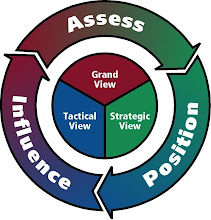
Through our Compass AE process, the team learns to collaboratively build and connect with their Tangible Vision. When they lead with their Tangible Vision, they collaborate regardless of the distance, the technology and the project culture.


[sidebar]
Q: What is the Tangible Vision?
A: The Tangible Vision is a goal, a plan that a Compass AE project team collaborates through. It also emphasizes a clearly-defined vision or mission statement that a team believes in.

###


How Email Brings You Closer to the Guy in the Next Cubicle

By Tim Harford 01.18.08 | 6:00 PM

As a columnist (which is fancy for "journalist in jammies"), I ought to personify th conventional wisdom that distance is dead: All I need to get my work done is a place to perch and a Wi-Fi signal. But if that's true, why do I still live in London, the second-most expensive city in the world?

If distance really didn't matter, rents in places like London, New York, Bangalore, and Shanghai would be converging with those in Hitchcock County, Nebraska (population 2,926 and falling). Yet, as far as we can tell through the noise of the real estate bust, they aren't. Wharton real estate professor Joseph Gyourko talks instead of "superstar cities," which have become the equivalent of luxury goods — highly coveted and ultra-expensive. If geography has died, nobody bothered to tell Hitchcock County.

Maybe it's because society hasn't wholeheartedly accepted the idea of working remotely. Or perhaps communications technology just isn't all it's hyped up to be. After all, the journalists and consultants who tell us that location is insignificant are biased. Like me, they're the people whose lives have been most transformed by the Internet and cell phones.

But I think the truth is more profound than either of those glib explanations: Technology makes it more fun and more profitable to live and work close to the people who matter most to your life and work. Harvard economist Ed Glaeser, an expert on city economies, argues that communications technology and face-to-face interactions are complements like salt and pepper, rather than substitutes like butter and margarine. Paradoxically, your cell phone, email, and Facebook networks are making it more attractive to meet people in the flesh.

The most obvious example is online dating. With sites like BBW (Big Beautiful Women) Datefinder and Senior People Meet, it's a lot easier to find like-minded flames. But that's not much use unless you live within driving range of your 98 percent-compatible love connection. The kind of contact that follows online winking is far from virtual.

It follows that matchmaking is most effective in densely populated areas, where there are plenty of fish but an awfully big sea. If you live in Los Angeles, online dating is the killer app. If you live in a small town, you've likely already met all your potential mates at church or a bar.

Of course, the rest of life isn't like courting. Or is it? In big cities, our communication tools are especially helpful because they keep us from getting lost in the crowd (which is not something you worry about in a one-street town). There are even services that tell you where your friends are by locating their cell signals.

New technologies can strengthen ties within your business, too. A 2007 study by economists Neil Gandal, Charles King, and Marshall Van Alstyne looked at the networks formed by 125,000 email messages from the staff of an executive-recruiting firm. It found that email's real value isn't in communicating with Kuala Lumpur but with Betsy in the next cubicle. The most productive workers have the densest intracompany email web.

This shouldn't surprise us. Email makes it quicker and easier to reach your colleagues — you don't have to interrupt them, and messages are easy to process. But email doesn't stop you from wanting facetime, too. Just the opposite: By enabling us to maintain productive business relationships with more people, it encourages more face-to-face contact. Have you noticed business travel dying out? Neither have I. Air travel is at record highs.

One day, perhaps, virtual communication will become so good we'll no longer feel the need to shake hands with a new collaborator or brainstorm in the same room. But for now, the world seems to be changing in a way that actually demands more meetings. Business is more innovative, and its processes more complex. That demands tacit knowledge, collaboration, and trust — all things that seem to follow best from person-to-person meetings. "Ideas are more important than ever," Glaeser says, "and the most important ideas are communicated face-to-face."

/// Compass AE process enables a team to build trust while building a project plan.

Which explains why the highest-tech industries are the most dependent on geography. In a study published in the American Economic Review, researchers examined 4,000 US-based commercial innovations and found that more than half came from just three areas: California, New York/New Jersey, and Massachusetts. Almost half of all US pharmaceutical innovations were invented in New Jersey, a state with less than 3 percent of the nation's population.

In theory, technology should allow new-economy firms to prosper as easily in Nebraska as in Silicon Valley. But far from killing distance, it has made proximity matter more than ever.

/// With the Compass AE process, the project team collaborates without borders. Distance, technology and project culture becomes irrelevant.

As for me, I've been finishing off this essay between a coffee date with my wife and some essential chitchat with my publishers at a central London restaurant. This old city isn't cheap, and it isn't easy. But with my cell phone and laptop to back me up, I can't afford to live anywhere else.

Tim Harford (undercovereconomist@gmail.com) is the author of The Logic of Life: The Rational Economics of an Irrational World.

http://www.wired.com/culture/lifestyle/magazine/16-02/st_essay

###

If you want your team to collaborate without borders, please email us at contact us at contactus [tat]collaboration360[dott] com . [ Replace [tat] with "@" and [dot] with "." ]

Monday, August 27, 2007

Using the Tangible Vision to "Connect to Collaborate"


A project team without a Tangible Vision is a team without a direction. They have no idea on what strategic matter(s) to focus on (during the meeting time)

###
August 26, 2007
Preoccupations
Minding the Meeting, or Your Computer?
By DEAN HACHAMOVITCH

BACK in 1994, when portable PCs started their descent from 15-pound luggables to today’s 5-pound laptops, I started taking mine to meetings at Microsoft, and so did my colleagues. So novel. So useful.

We could type notes. We could get information immediately from our computers instead of carrying a stack of paper or scurrying back to our offices to fetch a file. We could present our slides or show off new products. Geek thrills!

As we became more connected and casual with the technology, though, we embarked on some decidedly less meeting-oriented activities. We read our e-mail if the conversation took a dull turn. We checked news headlines. We surreptitiously logged on to the ESPN Web site.

In the last few years, we even started instant messaging one another during meetings, like eighth graders whispering in class: Did he just say or Does she realize that . Sometimes, people would even wisecrack over I.M., to see if they could make other people in the room laugh.

But now a whole etiquette has formed. The Microsoft.com Web site even lists seven rules for using laptops in meetings, including Make Sure There’s a Point and Turn Down Bells and Whistles. In some meetings, especially if the topic is sensitive, it just seems more respectful to leave the laptops closed. On the other hand, if the meeting is covering a variety of areas and the conversation is moving into something I’m not involved in, I don’t feel too bad about catching up on my e-mail. It beats doing so at 11 p.m.

Of course, there are mistakes and boundaries that you figure out over time. Recently, one of my colleagues was standing at the front of a meeting room, projecting some data from his laptop onto the screen. A toast popped up the little square window in the corner that tells you someone on your buddy list has logged on with a message from someone in the audience that his fly was open. This was a joke meant to remind the guy to set his laptop on presentation mode for meetings, which mutes instant messaging, among other things.

Everyone has their own way of handling the laptop question when running a meeting. When it’s me, I may sometimes glance over people’s shoulders to see if their screens look topic-related. Or if I see people buried in their laptops, I may ask for their opinions to see if they’re engaged.

Some speakers start a meeting with Laptops off, please. Others might chirp, Excuse me, we’re having a meeting here, if people are making more eye contact with their screens than with the speaker. Once, one of my bosses slammed the lid of my PC down in a fury because he thought I wasn’t paying attention.

Tablet PCs the kind that sit flat on your lap and are used with a stylus instead of a keyboard seem to be more socially acceptable. Maybe it’s because there isn’t a big dark rectangular barrier that you’re putting up between yourself and the speaker. Maybe it’s because we all grew up taking notes with paper and pen, so it’s more familiar. In any case, you can still do your e-mail, get an I.M. about dinner plans, pay your bills or surf.

But it’s not all etiquette, passing electronic notes and Web surfing. The technology is really useful. I can get data from the corporate Web. I can let my wife know I’ll be late without leaving the meeting room to make a call (and making myself that much later), or answer a colleague’s quick question immediately. Instant messaging lets me see who’s available outside the meeting room to send me information if I need it. Checking who’s online from your PC is like poking your head into the hallway to see who’s around to help you.

Laptops in meetings can be discouraging if the most senior people in the room are frequently looking down at their laptops or, worse yet, typing for an extended time. The presenter has to wonder how much he or she is getting across. I have to say that our senior management sets a good example in this regard. In meetings, I don’t see Bill Gates or Steve Ballmer doing e-mail they’re actively engaged, and listening and asking questions.

Laptops in meetings are also becoming fashion accessories, especially among employees in their 20s and early 30s. Their PCs have stickers like those of a high school binder: snowboard products, or geeky sayings like My other PC is your laptop I’m a hacker. There are political bumper stickers and all kinds of things that show off their interests, their image, their sense of humor.

I guess the computer coming to meetings is like bringing your office’s decorations along with you. You get a better idea of the people you’re meeting with.

SOMETIMES when I’m in meetings all day, I carry around my laptop to keep up on e-mail and phone messages, and to take notes. Many of my colleagues are doing the same, so by the 5 p.m. meeting we’re all looking for electrical outlets.

The more discreet way to check e-mail, I.M., and the Web at a meeting these days is the latest-generation cellphone. While they can’t connect to all the data on your PC (yet), smartphones connected to the Internet, with mobile versions of the same Office software on your PC make it easy for insatiable information seekers to sneak a peek at headlines or send off a quick e-mail without drawing attention. Just make sure to turn off that Girl From Ipanema ring tone.

Dean Hachamovitch is general manager of Internet Explorer for Microsoft. As told to Julie Bick, a former co-worker of Mr. Hachamovitch when she worked at Microsoft.

http://www.nytimes.com/2007/08/26/business/yourmoney/26pre.html
###

Tuesday, August 21, 2007

Connect to Collaborate (Working with Your Rival)


To connect to collaborate, both sides need to define their Tangible Vision first.
Collaboration is about everyone cooperating for the greater purpose.

Here is a story on the alliance of Cisco and Microsoft. Whether they can collaborate as one entity would be an interesting story.

Sunday, August 19, 2007

A Model of Collaborative Teamwork


"... It's a lot about coaching, doing things on the sidelines, making adjustments, getting our quarterbacks to play really well. ..." - Lane Kiffin, Raiders Head Coach

With the Compass AE methodology, a project team uses the Tangible Vision to understand the goal, and the specific objectives. They also use it to adjust to various circumstances.

A team that connects to collaborate is a team that will complete their Tangible Vision.

###

New coaching technique in RaiderLand
Nancy Gay

Sunday, August 19, 2007

The familiar white Raiders visor was gone Saturday night and so was Lane Kiffin's high-decibel coaching voice. Doctor's orders.

His Raiders were marching up and down Bill Walsh Field at Candlestick, shredding the 49ers' high-priced remodeled defense, yet Kiffin quietly wore his headset and low-keyed it all night. He appeared to let his coordinators - two of the best in the business - do all the hollering, play-calling and directing in a 26-21 49ers' victory.

"Coaching isn't always about yelling. It's a lot about coaching, doing things on the sidelines, making adjustments, getting our quarterbacks to play really well," said Kiffin, who didn't believe he was coaching any differently in his second NFL game.

Kiffin, to his credit, already has shown us he can take charge. And we learned he can delegate when he has to, a pretty admirable trait for a 32-year-old rookie NFL head coach who desperately wants to prove he belongs where he is.

If the Raiders exceed expectations in 2007 and perform a hammer throw to last season's 2-14 record by winning half a dozen games or more, Kiffin will get credit for a lot of things.

Among them: He should be lauded for assembling a hell of a coaching staff.

Defensive coordinator Rob Ryan, architect of the NFL's third-ranked defense in 2006, could have bolted Oakland in revolt when he didn't get the head-coaching job. But Al Davis, Kiffin and his loyal players convinced him to stay.

Hiring Greg Knapp, whose experience running the West Coast offense and tutoring quarterbacks - we'll give him a pass on Michael Vick - also smacked of genius. So was the addition of offensive line coach Tom Cable, he of the zone-blocking technique that allowed one sack and opened up monster rushing lanes and clear passing outlets.

This much was evident Saturday night, when Ryan and Knapp maintained most of the sideline authority. Kiffin nodded, watched and oozed ultimate authority. This has been the arrangement all along, really. Kiffin makes decisions and is the in-your-face voice, as long as the doc says it's OK.

Ryan and Knapp, who ooze experience and credibility, do a lot of the dirty work.

The players know it. They look to those coordinators. The Raiders did last week, when Kiffin was mysteriously laid up with an infection. They also looked to themselves.

"I think it says a lot about the staff, but it also says a lot about us as players," Pro Bowl defensive end Derrick Burgess said. "Hey, this is business and we're professionals out there. We knew we had take care of our business when coach was gone."


The teamwork and mutual respect on the Raiders' coaching staff is 180 degrees from the anarchy that ruled under Art Shell's watch, and you better believe the players are responding.

///
The best leaders are those the people hardly know exist.
The next best is a leader who is loved and praised.
Next comes the one who is feared.
The worst one is the leader that is despised.
If you don't trust the people, they will become untrustworthy.
The best leaders value their words, and use them sparingly.
When the leader has accomplished their task, the people say, "Amazing: we did it, all by ourselves!"
--- Dao De Jing, Chapter 17
///

Kiffin is not the reinvention of Jon Gruden. The age bracket is about the same, the boyish good looks are vaguely familiar. The energy level - a hell-fire, spittle-spewing, red-faced furor achieved through healthy doses of 30-something adrenaline and, in all likelihood, a case of Red Bull - has been pretty darn close.

But the budding legend of Kiffin, the youngest man ever hired to run an NFL team, took a bizarre twist last week when he, well, sort of disappeared from sight.

Within hours of coaching the Raiders to a 27-23 victory Aug. 11 over the Cardinals in the exhibition opener, Kiffin was flattened by a temperature of nearly 104 degrees.

Eventually, we learned he was hospitalized. For two days. Tests were run. Or were they? For several uncertain days, chaos momentarily returned to the super secret world of RaiderLand.

Players - who had grown accustomed to Kiffin's boisterous manner and presence - had no idea where their coach was when they returned to the practice field Monday. Except that he wasn't there.

Curious reporters finally discovered Kiffin was admitted to a Napa hospital. The Raiders' public-relations machine, which under the best of circumstances, operates with the openness and efficiency of the old TASS news agency, hoped that Kiffin's absence wouldn't be noticed.

Then the Raiders argued semantics: "Hospitalized? Well, he was at a hospital ..."

Across the chatty NFL, Blackberrys and e-mail inboxes began exploding.

When a 32-year-old NFL head coach is in the hospital for two days, you bet there is talk. "What's he got?" one NFL general manager demanded of a reporter via e-mail last week.

"A virus," was the reply.

"Out two days with a virus? Unheard of," the GM wrote back.

There isn't a lot of sympathy in the brutish NFL for head coaches who are felled for two days in training camp by anything short of an anvil on the skull.

In a sense, Kiffin's illness was unique. How many NFL head coaches have been downed by mononucleosis, one of the nastiest viral infections you can catch? High fever, swollen glands, sore throat that feels like you're swallowing broken glass. Would the Type A Gruden have handed off the megaphone to his assistants, even in an exhibition game? Probably not.

But Kiffin, who was a model patient Saturday night despite the urge to dial his vocal cords to "11," became an even better NFL head coach as a result of Saturday's pastoral sideline demeanor.

"I felt fine," Kiffin said, "and I know it's your job (to ask), but I kind of feel it has become a distraction to what we're trying to get done."

Not really. Kiffin kept it from becoming one by trusting his coaches to coach, and his players to play. Change has come RaiderLand. And that can be only good.

E-mail Nancy Gay at ngay@sfchronicle.com.

http://sfgate.com/cgi-bin/article.cgi?f=/c/a/2007/08/19/SP9IRLHSF.DTL

This article appeared on page C - 1 of the San Francisco Chronicle