Tuesday, September 18, 2007

Current Dilemma in a Westernized Global Society


For the global strategists. much time is wasted in traffic jams and waiting in lines. In the 90's telecommuting was considered to be the solution. The problem was that there was no tangible answer to this dilemma.

It is only a matter of time, that telecommuting will be the accepted protocol for running an organization.

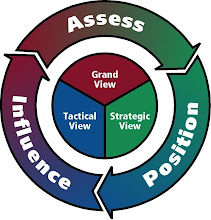
If the companies are going to properly telecommute, they will need to learn how to collaborate without borders. With our Compass AE methodology, the project teams can collaborate without borders.

The first step is finding people who can telecommute and operate as a team without any managerial oversight.

Distant team collaboration becomes tangible. With the current availability of web conferencing technology and information systems, project teams no longer need to meet at a central location. Members usually operate at home, client's office and coffee shops with web access. They connect and collaborate with each other with their Tangible Vision.

More information on Compass AE and Tangible Vision can be found in this blog.

# # #

September 18, 2007
Traffic Congestion Is Getting Worse, Study Says
By ANAHAD O’CONNOR

Mayor Michael R. Bloomberg’s congestion pricing plan may be facing harsh criticism from opponents these days, but the findings of a new national study offer a sobering wake-up call: drivers who commute between New York, New Jersey and Connecticut are wasting more time and money sitting in traffic than ever before.

According to the new study, the average motorist in the Tri-State area spent about 46 hours bogged down in rush-hour traffic in 2005, up from an average of only 15 hours two decades ago in 1985. Those 46 hours are the equivalent of six full work days, seven night’s of sleep, or five days of school — all of them wasted on roads and highways because of accidents, delays and the sheer volume of cars on the road.

But the report had other grim news as well. Besides spending more time in traffic, the average motorist is also spending more money, a total in 2005 of an extra $888 in lost time and added fuel consumption. That’s up from $784 in 2004, and $660 in 2003 — a relatively rapid increase. Nationwide, New York ranked No. 33 in this category in 1985; now it is No. 18.

The findings are likely to become grist for Mayor Bloomberg and those looking for a lift to his congestion pricing plan, which would charge a fee to drivers entering the busiest parts of Manhattan. In August, the federal government awarded the city $354 million to implement the plan, but that amount fell short of the roughly $550 million that Mayor Bloomberg had requested. The plan has also faced opposition from the City Council and the State Legislature, two groups that must approve the plan in order for the city to receive the federal money.

The new report, which looks at traffic trends across the country, was conducted by researchers at the Texas Transportation Institute and financed by the federal Department of Transportation. Over all, it found that the average amount of time wasted in rush-hour traffic nationwide has mushroomed from 14 hours in 1982 — the first year the study looks at — to 38 hours in 2005.

While the plight of motorists in the Tri-State area has worsened steadily since 1982, they have not fared as badly as drivers in California. In Los Angeles and Orange Counties, which earned the worst ranking, drivers wasted an average of 72 hours in rush hour traffic in 2005, and suffered $1,374 in lost time and added fuel consumption.

Los Angeles and Orange Counties have ranked No. 1 in the category of wasted travel time every of the study except 1984, when they were ranked No. 2. By comparison, the Tri-State area commute ranked No. 5 in 2005, and No. 15 in 1982.

Copyright 2007 The New York Times Company


http://www.nytimes.com/2007/09/18/nyregion/18cnd-commute.html?

###

Current Trend of Global Collaboration


It is only a matter of time that the old way of "traveling to collaborate" will decline. The amount of time that is being wasted in waiting and traveling is quite a lot.

There is a time and a place for traveling and there is a time and place for using video conferencing. Spending time waiting for an airplane can be used in other productive ways.

Are you tired of waiting?

With our Compass AE process, you and your team can collaborate anywhere. It does not matter what technology or what project methodology your team are using. It is all about connecting the team to the Tangible Vision.

The current dilemma is that most people do not know how to collaborate as a team, with or without the challenge of distance and individual culture

Another dilemma that we discovered is they do not know how to collaborate with the latest video collaboration technology.

In a future entry, we will talk about the importance of making a collaborative decision quickly in a global economy and how to integrate Compass AE and video conferencing as one collaborative protocol.

###

September 18, 2007
U.S. Working on Its Welcome
By SARA J. WELCH

In February, Eric Rozenberg, a Belgian travel executive, was en route to a convention in Cancún, Mexico, from Brussels when, he says, he experienced firsthand what other foreign travelers had told him about the problems of getting into the United States.

He said an official took him aside with no explanation as he went through immigration in the Dallas-Fort Worth airport and sent him to a separate room.

After waiting there nearly 90 minutes, Mr. Rozenberg, who travels to the United States on business at least six times a year, said, he very politely asked another officer what was taking so long. The officer glanced at Mr. Rozenberg’s passport again, told him to wait another 10 minutes, then handed it back to him without explaining what had happened.

The officer asked if he had missed his connecting flight, Mr. Rozenberg recalled. When he replied that he had, he said casually: ‘Oh, sorry about that; just tell them you were detained at immigration,’ Mr. Rozenberg said.

Similar complaints from foreign business and leisure travelers have led the United States government to take steps to improve the treatment of travelers upon arrival. In February 2006, the Department of State and the Department of Homeland Security announced a program, called Secure Borders and Open Doors, aimed at balancing the increased need for security after the 2001 terrorist attacks with the desire to ease travel to the United States.

Last February, the Homeland Security Department started the Traveler Redress Inquiry Program, or TRIP (trip.dhs.gov), which provides an online form travelers can use to file complaints electronically about any travel-related government entity. It offers more transparency and a one-stop location for travelers who feel, say, they weren’t treated properly or missed a flight because of a D.H.S. employee’s actions, said Kelly Klundt, a spokeswoman for Customs and Border Protection, which is part of the Homeland Security Department.

But while government officials say they are trying for change, there is no way to tell if progress has been made. Ms. Klundt said she did not know if the government kept statistics on complaints about poor treatment by customs and border officials.

Geoff Freeman is the executive director of the Discover America Partnership, a Washington lobbying group of leaders from the Travel Business Roundtable, Marriott International, Walt Disney Parks and Resorts, the Travel Industry Association and other companies and organizations. Since the organization was formed last September to promote the United States abroad, it has received hundreds of phone calls and e-mail messages, he said, from foreign travelers complaining of poor treatment by customs and border officials.

But, Mr. Freeman said, while most people who’ve come here from overseas since 9/11 say the entry experience is poor, beyond the airport, their U.S. experience is good enough that they’ll probably come back.

The partnership also found, however, that if foreigners had not visited the United States since Sept. 11 or had never visited, the stories they’re reading or hearing about the poor entry experience are discouraging them from visiting, Mr. Freeman said.

He said statistics from the World Trade Organization showed a 17 percent increase in worldwide travel since Sept. 11, while data from the United States Office of Travel and Tourism Industries showed travel to the United States declining the same percentage over the same period.

Former Gov. Tom Ridge of Pennsylvania, who served as the first secretary of the Department of Homeland Security, is working with the Discover America Partnership to find ways to improve the entry experience. By and large, my former colleagues do a good job, Mr. Ridge said. But anecdotally, I’ve heard we have to be a lot more sensitive. If even one traveler in 10,000 has a bad experience, that ripple effect is harmful.

Prakton Mal, who was born in India, lives in Oslo and is a Norwegian citizen, said many of his colleagues would rather participate in a videoconference than travel to the United States and risk embarrassment and ill treatment.

/// *** The continuing trend of more people wanting to use video-conferencing tool.

In March, he said, while on a business trip, he was treated rudely by a very sour and impolite immigration official at the Hartsfield-Jackson Atlanta International Airport because he had forgotten to sign and date his immigration form. It was a small incident, but it could have been avoided, Mr. Mal said. He said he takes 18 international business trips a year, and I sometimes feel that the United States stands out with their arrogant behavior toward innocent incoming businesspeople.


One executive, an American citizen who was born in France, said he presented his American passport to a customs official at Miami International Airport after returning from an overseas business trip. The official noticed he was also carrying a French passport.

He told me it was illegal to carry two passports, the executive recalled. He held both passports in front of me and asked, ‘Which one do you want me to destroy?’ like it was a game.

The executive, who did not want his name disclosed because he was concerned that might affect his business dealings, said he insisted he had the right to carry two passports because he was a dual citizen. (A State Department spokesman confirmed this; the law specifies only that American citizens must present their American passport when entering the United States.)

The official kept him waiting about half an hour, then returned both passports, the executive said. But he said he’d put a note in my file that I was breaking the law and I’d get stopped the next time I traveled. He said he filed a complaint electronically, but they didn’t even acknowledge receiving it.

Ms. Klundt said all customs officials were required to take an annual professionalism training course, which is updated every year. We’re concerned about these negative situations and want to address them, she said. But we also need to focus on our mission, which is keeping bad people and bad things out of the country.

Mr. Ridge said it was that occasional rude person who creates all these horror stories.

The welcome mat has a little dust on it right now, he added. We have to spruce it up a bit.

Copyright 2007 The New York Times Company
http://www.nytimes.com/2007/09/18/business/18entry.html

# # #

September 17, 2007
Seeking Relief
By JOE SHARKEY

NOW what?

Usually, fall brings relief from summertime air traffic delays, cancellations and missed connections. But this year, some travelers are not betting on it.

I’m certainly not going to be happily whistling on my way to the airport, thinking the troubles of the summer are over, said Will A. Allen III, a management consultant from Raleigh, N.C., who is on the road or in the air more than he is home.

So far, this year in air travel merits a place in the record books. During the first eight months of 2007, a quarter of all domestic flights arrived late. Late flights also created a deluge of missed connections, and flight cancellations were higher than ever. In the three months ending Aug. 31, 52,840 domestic flights were canceled, according to FlightStats.com. That number compared with about 16,000 in the same period last year.

/// *** Ask yourself, do you want to spend your time waiting? ... With Compass AE, you and your team can "video-conference" as a team properly.

About the only flight that took off on time this summer was the space shuttle, said Joe Brancatelli, whose subscription business-travel Web site is Joesentme.com.

Airlines usually blame bad weather for problems, and given that the air traffic control system is stretched to its limits, weather can cause excessive delays, even in the fall, said David L. Beckerman, the director of consulting services at Back Aviation Solutions. In a system where carriers have cut domestic capacity and really need every aircraft in service to carry their high passenger loads, this is more problematic than it was a few years ago, he said.

Adding to the problems, the airlines say, is congestion caused by a surge in the use of corporate jets as business travelers try to avoid delays. The situation will only get worse as new four- to six-seat business aircraft, called very-light jets, come off the assembly line.

Shrewd business travelers usually pride themselves on having a backup plan. Given the current mess, how can people cope? Stay home, Mr. Brancatelli said, not entirely facetiously.

Avoiding crowded major-hub airports is one limited alternative. In recent years, some business travelers have been using smaller outlying airports — like Manchester International in New Hampshire, 50 miles from Boston, and Ontario International, 35 miles from downtown Los Angeles — with point-to-point routes that avoid frantic connections. Manchester’s passenger traffic, for instance, increased to more than 4.5 million last year from 1 million in 1997.

Traffic growth at such airports comes mostly from point-to-point travel, often in short-haul regional routes but also in longer ones by nimble carriers like Southwest Airlines.

For the first eight months of 2007, Southwest, whose national route network was built around point-to-point flying, had an 8.3 percent increase in passenger miles flown. On the other hand, American Airlines, which builds its system around major hubs, reported a 2.1 percent decline.

Still, American and the other major airlines carry by far the most passengers and offer the largest number of routes and frequencies, with operations firmly based at hub airports that in some cases, like O’Hare International in Chicago, are often unable to accept new traffic. Many outlying airports have also been operating near capacity, and are often unable to expand operations because of strong opposition from residents who live nearby, analysts say.

Rail alternatives, like Amtrak’s Northeast Corridor service, also operate near capacity. All of which is leading more drivers to another option: driving.

Mr. Allen, the consultant in Raleigh, saw the meltdown coming. Last spring, he began driving occasionally on trips that he used to fly.

My limit is about 400 to 450 miles, eight hours, which is how long you can spend getting to and from an airport and flying somewhere, he said. But not long ago, Mr. Allen drove 900 miles to a job. At least in the car you’re in charge of your own schedule, he said.

Doug Laubach, who owns an engineering business near Syracuse with eight employees, often uses the company Audi for trips. There is no reliability left in the air traffic system, he said. He often drives to avoid delays at the Syracuse airport and to get to a major hub like Chicago, where he then flies to jobs in places like Colorado. Mr. Laubach encourages employees who drive to add recreation to the trip, so the Audi may be loaded not only with laptops and luggage but also bicycles and other sports equipment. I want my people to feel they have a life, he said.

How did the airline schedules come to such a sorry state?

As airlines have reduced costs by cutting capacity, schedules and employees, planes have become fuller than ever. Some critics say that the airlines — now profitable after years of losses — have no motive to add passengers or improve service.

Airlines have also been criticized for clogging routes with more regional jets, which usually accommodate 50 passengers at most. But the airlines say that regional jets — which carry about one of every four passengers — are serving the smaller markets that large jets don’t. Instead, they point the finger at the corporate jets.

Pushed by consumer discontent with commercial airlines, business aviation has been growing rapidly. There are now more than 11,000 private jets in the United States, compared with about 7,000 in 2000, according to the National Business Aviation Association. The trade group argues that business jets mostly use smaller, noncommercial airports and are in the sky far less often than airliners.

Regardless, there will be more of them soon when the very-light jets take off. The short-range jets are relatively inexpensive, from about $1.4 million to more than $2.5 million. The Federal Aviation Administration estimates that more than 350 of them will be flying next year, and that their numbers will grow by 400 to 500 a year for a decade.

We’re going to be filling in gaps where air service is inadequate, said Ed Iacobucci, the chief executive of DayJet in Boca Raton, Fla., a company that is buying hundreds of Eclipse 500 very-light jets to start an air-taxi business, selling seats on demand. The company plans to begin flying among Florida cities that many business travelers now reach by driving or by spending hours in commercial airports.

Some potential customers of air taxis say that saving time outweighs the extra cost, roughly equivalent to a first-class commercial fare. We all have families at home, said Eric Romano, a lawyer in a West Palm Beach, Fla., firm who has signed up to be a DayJet client. Some industry observers, like Michael Boyd of the Boyd Group Consultancy in Evergreen, Colo., say blame for the problems lies not so much with the airlines — big or small — or the weather as with the air traffic control system itself. Responding to that criticism, the F.A.A., which forecasts 768 million domestic passengers flying this year, up from 666 million in 2000, has pointed to future improvements like a $25 billion upgrade using G.P.S. technology to allow planes to fly closer together near hubs.

But Mr. Boyd said that because F.A.A. improvements in the past have been too little and too late, airlines now routinely pad their schedules, adding flight time to hide the extent of delays.

The problem isn’t the weather, it’s the air traffic control system’s inability to deal with the weather, he said.

Still, air traffic keeps growing. We’re assuming the skies are going to get a lot more crowded, said Robert E. Brown, the chief executive of CAE Inc., a company with a worldwide network of 24 pilot-training centers.

Passenger discontent is also increasing over the problem of aircraft stuck on airport aprons. This year, passengers have been stranded at dozens of airports, sometimes for 10 hours or more, as pilots waited for takeoff slots in inclement weather. Kate Hanni, a Napa, Calif., real estate agent, was among the passengers stranded on several dozen flights diverted from Dallas last December. Her plane was sent to Austin, Tex., where the passengers sat for more than nine hours as food ran out and cabin conditions deteriorated.

Since then, she has been advocating federal legislation, a Passengers’ Bill of Rights, specifying when airlines need to allow passengers to get off parked planes and ensuring enough food and water and basic sanitation. Ms. Hanni has marshaled a network of volunteers who keep records, including e-mail messages and phone numbers, from thousands of stranded passengers. The Web site is flyersrights.com.

Ms. Hanni plans a publicity campaign for Wednesday. We’re going to have a strand-in in Washington, she said, with a tent simulating conditions on a stranded plane.

But frequent fliers like Mr. Allen have no illusions that conditions will improve soon. In years past, he said, fliers sharing tales of woe at airport lounges could always find a fellow traveler who chided them for exaggerating the troubles.

I never run into those people anymore, he said.

Copyright 2007 The New York Times Company

http://www.nytimes.com/2007/09/17/business/businessspecial2/17jam.html

###

Monday, September 17, 2007

Latest Success of Collaboration360


Recently an Asian wireless game company used our C360 consulting services and our Compass AE methodology to secure a monetary grant to launch their latest business endeavor. They used our Compass AE process to collaboratively determine the grand goal and the process to reach the goal.

After three weeks of waiting, they successfully received the grant.

The client is now using our Compass AE process to define the goal and the objectives of their marketing development and the product development activities. They asked us to guide them in the challenges of collaboratively building and connecting a separate Tangible Vision for each activity.

It is a good experiment for us to see how well our collaborative process works in the area of product development .

Before building the Tangible Vision, we made a point to know the business of the client and their marketplace.

Quoting what our client told us , "Collboration360 Consultants did a great job in helping our team to collaboratively focus on the importance of our project. We used Compass AE to clarify our strategic direction and the necessary strategic steps. ... We were quite happy with their process and services."

- More details to come -

Thursday, September 13, 2007

Current Trend of Distant Project Teams


As time goes on, distant team collaboration becomes tangible. With the current availability of web conferencing technology and information systems, project teams no longer need to meet at a central location.

Members would operate at home, client's office and coffee shops with web access. They connect and collaborate with each other with their Tangible Vision.

###

Magnets for money
Sep 13th 2007
From The Economist print edition

Financial centres are booming, despite predictions that new technology would spell their doom. But competition is getting keener, says Julie Sell
[ http://www.economist.com/displaystory.cfm?story_id=9788166]

THE late Middle Ages were a golden age for city-states. Merchant guilds created a network of them that dominated trading along the Baltic and North seas for centuries. Cities such as Lübeck, Hamburg and Bergen flourished in this early form of globalisation.

In time, the early 21st century may come to be seen as a golden era for a different sort of globalised city-state. Its protagonists are found in London's Mayfair, lower Manhattan and Hong Kong's central business district. Rather than loading ships, they spend their days (and many nights) in front of computer screens, moving zillions of dollars, pounds, euros and yen around the globe at the flick of a key.

Technology, some predicted, would end this sort of clustering in city centres. Why would financiers want to live and work in pricey, jam-packed urban jungles? Armed with broadband, mobile phones and BlackBerries, they could work from almost anywhere. Yet as this summer's market turmoil showed, a BlackBerry operated from a beach is not always enough. Besides, those urban jungles have their compensations. So rather than dying out, financial centres are proliferating.

Today's financial centres—the cities where big financial transactions are done and a dizzying array of financial products are traded—include not only long-established places such as New York, London and Tokyo, but also a growing number of newer financial hubs in Asia, the Middle East and beyond. As Dubai has shown, following in Singapore's earlier footsteps, a determined government can build an international financial centre from scratch.

Unlike the walled medieval city-states, today's financial centres are increasingly dependent on their connections to one another. Technology, the mobility of capital and the spread of deregulation around the globe have created a vibrant and growing network. When one city is asleep, another is wide awake, so trading goes on round the clock. The number of transactions between financial centres has surged recently as investors have diversified across regions and asset types.

Yet interconnectedness has a cost. In an era of greater volatility, the latest market news spreads from one continent to another in an instant, as financiers have recently been reminded; and knock-on effects on things like bonuses and property prices soon follow.

New York and London have firmly established themselves at the top, but not even the biggest centres can afford to be complacent. New York, still number one in global financial terms by many measures (see chart 1), has recently acknowledged the competition it faces from other centres. London has surged on a wave of new money and talent, but needs to resolve problems of its own. Some cities that once aspired to global status have lost their edge, and new ones are starting up.


Michael Klein of Citigroup cites two big changes that have encouraged the proliferation of financial centres around the globe: the shift of economic activity and jobs towards China, India and other developing countries, and growing demand for natural resources from the Middle East, Russia and parts of Latin America. The resulting shift in liquidity is “one of the greatest transfers of economic activity and wealth in the past 100 years,” says Mr Klein. With barriers to trade falling in many developing countries, the cost of capital has also fallen dramatically.

These changes have made governments in emerging countries more conscious of the benefits of a strong financial sector. More capital and more jobs are good for social and economic stability, so countries that used to rely for capital on banks, the rich or the state are allowing new capital providers into their markets. Money that used to be routed through the world's biggest hubs now often goes through non-traditional capital markets, or directly between emerging markets.

Although financial hubs have proliferated, few of them can claim to be truly global. Many members of the financial community feel that only New York City and London deserve this title. Both are one-stop shops for a full range of financial services. Any big financial organisation has to be represented there. From investment banking to insurance, stocks to derivatives, everything can be found in the world's two pre-eminent financial hubs.

What do they have that others don't? They score well on a package of key criteria that global financial firms are looking for: plenty of skilled people, ready access to capital, good infrastructure, attractive regulatory and tax environments and low levels of corruption. Location and the use of English, the language of global finance, are also important. Based on those measures, a survey by Z/Yen, a consultancy, picks London, New York and Hong Kong as the world's top three financial centres.

Finding and retaining good people has become an ever more important factor. Steven Kaplan and Joshua Rauh, a pair of economists at the University of Chicago, reckon that capital deployed per employee (the amount of money firms have invested divided by the number of staff) at the top 50 American securities firms surged from an average of $136,000 in 1994 to $1.79m in 2004. For many skilled professionals who can pick and choose their place of work, quality of life matters a lot.

Although New York and London are pre-eminent, other big cities play important international roles of their own. Some have prospered as the financial capitals of big national markets (Tokyo and Sydney) or the gateways to emerging regions (Hong Kong, Singapore and Dubai). Others have found success in niches. These include Geneva (private banking), Zurich and Bermuda (insurance and reinsurance), Chicago (futures and options), Qatar (infrastructure finance) and Bahrain (Islamic finance). Yet many of these, too, are trying to diversify.

Governments are paying more attention than ever to wooing and keeping financial firms because of the benefits they bring with them, such as highly paid jobs, large tax revenues and international connections. In New York and Hong Kong the financial sector accounts for more than one-third of total city tax revenues. In smaller centres it often makes up a large chunk of total employment.

Aside from the political and economic gains to the host countries, economists and investment bankers point to two wider benefits from having a range of financial centres around the world. One is the increase in overall liquidity as new countries and regions become integrated into the global financial system. The second is increased efficiency as competition between centres drives down the cost of trading and other financial transactions. New and developing financial centres are knocking down protectionist barriers and emulating the regulatory practices of the more established hubs.

The city-states that dominate today's financial world are connected not only by mobile capital and people, but increasingly by exchanges too. Exchanges have traditionally been at the heart of important financial cities. They grew up serving mainly national markets, but have changed fundamentally in recent years. A growing number are now publicly owned, which has forced them to shed their clubby ways and compete more openly.

Now they are teaming up across national borders. The first ever transatlantic merger between exchanges took place earlier this year when the New York Stock Exchange bought Euronext, a pan-European exchange group. The deal is being closely watched as a precursor to further cross-border consolidation. The London Stock Exchange is merging with Borsa Italiana, Italy's main market. Deutsche Börse is teaming up with the International Securities Exchange in New York. The big exchanges in Western countries are linking up with counterparts farther east as well, from the Dubai Mercantile Exchange to the Tokyo Stock Exchange.

This consolidation raises questions about the future relationship between exchanges and global financial centres. Exchange listing fees and affiliated services are a big source of income for host cities. Exchanges are also seen as important political prizes. But the rapid growth in cross-border trading has made life more difficult for national regulators.

This special report will examine the factors that create and sustain global financial centres and explain why physical financial hubs—teeming with banks and exchanges but also with legal, accountancy and public-relations firms and consultancies—continue to matter so much. It will also consider what their rise means for the global financial system, and how it is changing the cities that are home to these clusters.

Copyright © 2007 The Economist Newspaper and The Economist Group. All rights reserved.


http://www.economist.com/displaystory.cfm?story_id=9753240&fsrc=RSS

###

Monday, September 10, 2007

Building a Tangible Vision for the New Economy


When building a Tangible Vision, it is important to identify the goal, the specific objectives, the value points, the risk points, intangibles, etc. If the Compass implementers are collaboratively willing to do that, then they will achieve their goal.

###

September 9, 2007
Re:Framing
When Balance Sheets Collide With the New Economy
By DENISE CARUSO

TODAY’S sophisticated knowledge economy is stuck with the equivalent of an abacus for measuring the actual financial value of corporate assets and liabilities.

At issue is a growing collection of crucial resources known as intangibles: assets or liabilities that have no obvious physical presence, but that represent real value or vulnerabilities.

Patents, trademarks, copyrights and brand recognition are most commonly recognized as intangibles. But as the nature of doing business has changed, the list has grown.

For example, the most valuable assets of an innovation-based company today its intellectual property, software investments, staff and managerial expertise, research and development, advertising and market research, and business processes have no natural home on the balance sheet.

They can be recorded as expenses or sometimes, in the case of intellectual property, as liabilities, says Nir Kossovsky, the chief executive of Steel City Re, which assesses and insures companies’ intangible assets. But often, they do not make their way onto the accounting ledger at all.

Reputation is one such intangible asset; ask Mattel about its value, after its third recall of toys this summer. Or JetBlue Airways, which built a stellar reputation for customer service but neglected to fortify its computer network. When that network failed in the winter and stranded thousands of customers, the company’s stock price and good name both took tremendous hits.

What’s more, the market is demanding that companies prove that their business conduct is environmentally and socially conscious not on the basis of ideology, but because to do otherwise exposes them to financial risk.

The vulnerability of a global economy to cataclysmic risk, from terrorism to pandemics and extreme weather, is also pushing companies to disclose processes and strategies they have to ensure continuity after a disaster.

But because accountants have found it impossible to determine the value or the risk of such assets with certainty or objectivity, official financial accounting rules give intangibles a wide berth.

Instead, each company makes its own valuation of intangibles, guided only by very general accounting standards. There is not the rigor and uniformity that governs the valuation of ‘tangibles.’ In all cases, there is little relationship to market value, said Mr. Kossovsky, who is also the executive secretary of the Intangible Assets Finance Society, an advocacy group that is working to develop new standards and practices for monetizing intangible assets.

Yet today’s markets are being transformed by intangibles, and a growing number of companies are scrambling to find the methods that will help them better use, develop and communicate about them. In the last three years, investors have been looking at how social and environmental issues translate directly to market value, said Jed Emerson, a senior fellow at the Generation Foundation (the philanthropic arm of Generation Investment) who is credited with developing an approach to assessing intangibles called the blended value proposition.

Mainstream business is less and less able to function without paying attention to these things, Mr. Emerson added. Ten years ago, at the World Economic Forum, the talk was all about opening new markets and currency exchanges. Today, it’s about AIDS and education systems in South Africa, and things that you wouldn’t have historically heard major C.E.O.’s voicing concern about. Stakeholders in emerging markets want to know how investment translates to jobs, environmental concerns, etc.

Over the past couple of decades, finance experts and strategists have developed many methods to better value various intangibles methods that corporations and governments are widely adopting.

For example, one of the earliest approaches, the triple bottom line (for people, planet and profit), was ratified early this year as the standard for urban and community accounting by the United Nations International Council for Local Environment Initiatives. According to the consulting firm Bain & Company, a more recent approach to valuing intangibles, called the balanced scorecard, was being used in about 57 percent of international companies by 2004.

As yet, none have been adopted as a standard by the official financial accounting bodies. But it is only a matter of time until they do, according to Sara Olsen, founding partner of the Social Venture Technology Group, a San Francisco firm that specializes in developing nonfinancial valuation methods.

Ms. Olsen noted that leading business schools are already training students in these new, inclusive valuation methods, and that many companies are also busy teaching others how to credibly analyze their own intangible assets.

Leading public companies recognized the value of the process some time ago. In April, Fast Company magazine teamed up with the S.V.T. Group and the social investment strategy firm HIP Investor to rate the human and social impact of 21 companies that say they have sustainability practices in place, including Wal-Mart Stores, United Technologies and McDonald’s.

I would put money on it, that within a generation this will be a commonly accepted management practice, Ms. Olsen says, with its own standards body like the Financial Accounting Standards Board that maintains, updates and oversees enforcement of best practices for valuing intangibles.

Many who have been working in this area agree. Not only is the change inevitable, they say, but it is well under way.

Some people think the logic of econometrics was handed down by God, but it’s actually the result of 40 or 50 years of economists and accountants arguing about corporate performance, said Mr. Emerson of the Generation Foundation. We’re now at the early stages of evolving that process. Today it’s a very different conversation, and all these efforts to capture value more wholly at the corporate level, across companies, and at the broader level of society are positive examples of innovation.

Denise Caruso is executive director of the Hybrid Vigor Institute, which studies collaborative problem-solving. E-mail: dcaruso@nytimes.com.
###