Showing posts with label Telecommute. Show all posts

Sunday, March 30, 2008

Compass AE + Video Conferencing = A Team Collaborating Without Borders


Traveling costs are going up.


Video conferencing is on the rise


Your virtual team of project implementers are located at
different remotes. How do you get them to collaborate as a team?


If some teams cannot collaborate in close quarters,
what are the chances that they will collaborate
efficiently
well at remote locales?


How do you get them to collaborate as a team?
While technology connects people,
a good strategic team collaborative process is
the key to a project success.
Do you have a process that can get people to
collaborate as a team?

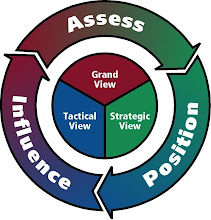
Our Compass AE methodology
is a team collaborative approach that.emphasizes on advanced planning. It enables the project team to use our Tangible Vision component to plan their goal and strategic overview. They are always collaboratively prepared for all situations. The team understands what are the specific priorities, the particular approaches and the different circumstances that could occur.

A properly-built team collaborative process enables the project implementors to effectively utilize their technology in specific situations. Without a process, technology is only effective in limited situations.

Our Compass AE process also allows them to collaborate regardless of the distance, the technology and the project culture.

In future entries, the beneficial values of Compass AE will be explained.

If you are interested in knowing more about Compass AE as a strategic collaborative tool. please e-mail us at Service[aatt]collaboration360[ddott]com


###

Pleased to meet you, virtually

13.03.2008 - Videoconferencing is coming into view for more and more businesses as prices fall and quality improves. Recently, 240 employees of the Revenue Commissioners from 11 regional offices attended a seminar on VAT. In the past, this would have involved a mass exodus of staff to a central location such as Dublin, an administrative hassle trying to accommodate the numbers in one room and thousands of man-hours lost as workers made the journey.

Upon finishing the recent seminar, however, employees were back at their desks in minutes. Videoconferencing technology enabled the workers to link in from the meeting rooms in their offices and partake in the information seminar with minimum disruption to productivity.

Last year, the Revenue Commissioners embarked on a six-figure rollout of videoconferencing. So far, 25 offices in major towns around the country have had a room kitted out with a video screen, audio equipment and network connection, with five more offices due to come on stream shortly.

On top of that, about 115 senior managers have been supplied with desktop webcams to enable live, one-on-one video meetings. The upgrade of the videoconferencing technology is providing tangible benefits for Revenue, says Paul McDonald, business operations manager, Revenue.

"The new system can link up to 12 sites at the moment to deliver seminars and we will be extending this in the future. Previously, we could only link two sites at a time.

"If necessary, we can cram dozens of people in the videoconferencing room. If you're using it for something like a training session all staff members don't need to be visible to the trainer on the other end. They can hear what's being said and get their chance to ask questions."


Cutting costs is not the chief driver for Revenue, says McDonald. "There are benefits vis-à-vis savings in travel costs and at some stage we'd be looking to reduce carbon emissions, but better communication is the main driver."

/// *** Better communication creates efficiency

A lot of Revenue's work is based on legislation so any changes to the law and the knock-on effects for the tax system have to be communicated to all staff at the same time to avoid regional discrepancies. Videoconferencing smooths the passage of this information through to those at the coalface.

For Icon Clinical Research, improving productivity and keeping on top of vital relationships are the benefits of videoconferencing. "One of our drivers for using videoconferencing technology is to ensure we maintain necessary relations with staff, peers and customers without travelling all the time to do so," says Joe Daly, IT director, EU and rest of world, Icon Clinical Research.

/// Think of the time and money that can be saved from not traveling all of the time. Time is money.

The biopharma multinational has offices in 40 countries, many of which utilise dispersed workforces. All the main offices use videoconferencing to keep in contact with each other and also to help manage remote workforces.

It's a development jetlag-weary executives of the 5,500-strong multinational are very glad of.

"We're a global company and we do have quite high travel costs, particularly for client visits and general meetings," explains Daly. Videoconferencing has reduced the number of trips executives make, freeing up time and curbing expenses.

When traveling, the anxiety of waiting for the uncertainty can be overwhelming.
This stress causes
the traveling professionals to be unproductive.
The question is ... do you want your people to perform and produce
below their norm?

Cutting down on trans-Atlantic crossings was also a key driver in NTR Group's adoption of the technology. The company's head office in Dublin had Digicom install a Polycom VX7000 videoconferencing system in its boardroom last year.

As a large global company with a number of subsidiaries, including Greenstar, Bioverda and National Toll Roads, NTR sees videoconferencing as instrumental to how it conducts its business.

"About 40 to 50 staff members in the Dublin office, primarily senior management, use it, as do other members of staff on occasions," says Gareth Delahunt, network administrator, NTR.

He says the decision to deploy videoconferencing was less of a money issue and more to ease the pressures on the diaries of senior executives.

"You can't be in two places at once. It facilitated getting a lot of work done," he quips.

Improvements in the quality of non-proprietary videoconferencing systems that can 'talk' to other systems is also driving uptake of the technology. For example, NTR's videoconferencing system is used both internally for company business and externally for contacting other organisations.

One of the main developments spurring the onset of videoconferencing is the wider bandwidths made available through broadband internet.

Previously, videoconferencing was done over ISDN lines, which was more expensive and awkward to implement. Now, companies use their IP (internet protocol) networks to facilitate internal video communication.

"ISDN was used in the past and it involved getting three lines brought into your building," explains Jared Huet, audiovisual consultant, Digicom. "Nowadays, companies are joining their networks together so they can make video calls over the internet."

The benefits of IP video is there's no cost per minute, whereas with ISDN you're paying per minute, per line. Utilising the three ISDN lines needed for videoconferencing means you're making three international calls and being charged per minute. With IP video there's zero call costs; it's an add-on to your existing network charge.

However, there are challenges around installing videoconferencing, both technical and cultural.

"Typically you use your network to transfer data from one server to another or to send email internally. It doesn't have to get there immediately. In real-time communication, however, a one- or two-second delay would make a conversation unworkable," says Daly.

"Because of that you have to give videoconferencing a higher quality of service on the network. Typically you use up 384Kbps of bandwidth for a two-way conversation between two videoconferencing units. You have to make sure you've enough bandwidth and that you've prioritised that type of traffic so it goes quicker than anything else."

Changing people's habits is perhaps the most challenging aspect, Daly believes. "In all the companies I've worked for, people think it's great initially but the novelty does tend to wear off after a bit."

"Our challenge now is to sell this to our people," says McDonald. "But anyone who has used it is quite impressed. The quality we have now is far better."

A high-definition future for videoconferencing in Ireland

The number of videoconferencing units sold in Ireland has grown about 100pc in the past three years, according to specialist reseller Videnda.

The yearly growth rate of around 33pc is down to three factors, says head of finance and operations, Liam Fahy. The equipment has got better; there's more bandwidth available due to broadband rollouts; and there's growing concern to reduce carbon emissions.

It's also due to people tired of trawling through airports and hotels. "Going over to London or down to Cork from Dublin for a one-hour meeting takes a full day. People are sick of it."

Sales of videoconferencing units are rising and customers are increasingly opting for high-definition (HD) units, says Fahy.

"One of our major suppliers went from shipping no HD units to it being 40pc of what they shipped in the space of six to nine months."

Fahy estimates over 1,000 Irish companies use videoconferencing, with the ratio of standard-definition to HD around 70:30.

Prices range from €3K for entry-level standard-definition units up to €25K for top-of-the-range HD units.

By Niall Byrne

http://www.siliconrepublic.com/news/news.nv?storyid=single10506

Sunday, February 17, 2008

Compass AE: A Solution for Telecommuting


Many people are currently living in the suburbs. traveling many miles to get to work. The amount of time it takes to travel from home to the office (and vice-versa) has become so unproductive to the company and their family. That the negative effects have started to affect the worker in many ways.

People asked me, "Is there a better way to use their time?"

Instead of wasting their time traveling from place to place, a project team trained under Compass AE, can spend their time productively, working on their projects at home or anywhere.

With our Compass AE process, the team collaborates without borders. In other words, they can collaborate anywhere regardless of the distance, the technology and the project culture.

If you are interested in learning more, please email us at contactus [aa_tt] collaboration360 [d_ott]com


###

Sunday, February 3, 2008 (SF Chronicle)
Riding That Train/Meet the people who seem to travel as many hours as they work on a long commute to Sacramento
Sam Whiting

At 6 on a Wednesday morning, Jim Bourgart is already 15 minutes into a 175-minute commute by foot, bus, train and foot again. From downtown San Francisco he'll catch an Amtrak motor coach to the Emeryville station, where he'll sit 20 minutes on a hard plastic bench waiting for the 6:40 to Sacramento.

He doesn't mind as long as he is moving. It is the lost sleep time in the waiting room that hurts. Since the Capitol Corridor runs both the bus and the train, you'd think it could tighten the time-cushion allowed for traffic that never appears on the eastbound bridge.

"I could use those extra 20 minutes, or even 10 or 5," says Bourgart, who starts his day with a 12-minute walk in the dark from his SoMa condo to the bus stop at the Market Street entrance to Bloomingdale's. "Every minute counts, especially in the morning."

The Capitol Corridor is a line made possible by the voters, who in 1990 approved Prop. 116 to provide state funding for intercity passenger rail service. Until 1998, there were only four trains each direction per day and the morning commute was essentially westbound only. Now there are 16 roundtrips. The State of California owns the rolling stock, Union Pacific owns the tracks, BART supplies administration, Amtrak staffs the trains and stations and a joint powers authority oversees it. The Capitol Corridor is like Caltrain with more layers of agencies.

Between four morning trains, 1,000 passengers ride from the Bay Area to Sacramento daily. Emeryville is by far the busiest station, with 135 daily commuters. They may be unhappy about spending four hours a day on a train, but they are less unhappy than they would be spending three hours a day in a car. By either mode of transit they are less unhappy than they would be living in the great Central Valley. That goes for patent attorney John O'Banion, who upped and moved with his wife to San Francisco after 35 years in the state capital.

"We're blessed with this beautiful city, and you don't have that in Sacramento," says O'Banion, who walks down California Street from Nob Hill to meet his bus. "So you give up a little bit."

Most of what you give up is sleep. O'Banion, 54, gets by on 5 1/2 hours. He looks fresh in the Emeryville waiting room, though he won't get his cup of coffee until the train leaves the Suisun/Fairfield stop, an hour away.

(Among other things you learn from the conductors is that the proper pronunciation is "Sue-son.")

The 6:40 is the most popular morning run and the San Franciscans can't get off those plastic chairs and out of that bright waiting room fast enough. A few minutes before the boarding call, they blow right by the sign that reads "Warning: Please remain behind this sign until the train stops," cross the tracks and are on the platform.

Of the 135 riders who board here, 80 are bound for Sacramento and 55 for Davis. Those going to Sacramento on the 6:40 are mostly lawyers and policymakers. The Davis riders are shabby graduate students and earthy faculty with bicycles heading to the UC campus. The students stash their bikes in the rear and climb upstairs into the quiet car, which is kept dark so they can curl up in a double seat and get another hour of sleep.

The Capitolists are one car up. Because the train originates in Oakland, as opposed to San Jose, it is still on time and empty when it reaches Emeryville. Not as empty as the Amtrak bus coming over from the city, but empty enough that everyone gets a two seater, and some get a four seat
booth with a table in the middle.

"I've got two offices," says O'Banion, unsnapping his briefcase. "I've got Amtrak and I've got Sacramento." Seated in the immediate vicinity, like the traveling salesmen in "the
Music Man" are Bourgart, Deputy Secretary for Transportation and Infrastructure; David Crane, Special Advisor to the Governor for Jobs and Economic Growth; Preston DuFauchard, California Corporations Commissioner; and John Rea, General Counsel for the California Labor & Workforce Development Agency.

They spread out, put their 10-ride tickets on the edge of their tables - so as not to be interrupted by the conductor - and begin their efficiencies. Three minutes into it, Crane has his laptop open and his BlackBerry working, his breakfast set out and his hard-boiled egg peeled.

"Without wireless, this would be a much less productive run," says Crane, who is on the intense end. He went to law school, just for the fun of taking the bar exam. He never intended to practice. When Schwarzenegger was elected, Crane started by driving to the Capitol, but switched to the train four years ago. Sometimes he returns on the 7:40 p.m., which gets in
at 9:20, getting him home at 10 to get up at 4:30 or 5 and start over.

"Because you can work so pleasantly in the train, it's delightful," he says, "as long as you like to work."

The fare from San Francisco is $24 one-way. Half the passengers buy blocks of tickets, bringing it down to $14 one-way. Unlike Amtrak lines, there is no federal money involved in the Capitol Corridor. Its $40 million budget comes from passenger fares and the state, on a 50-50 split.
At least two of the regulars on the 6:40 have some indirect connection to funding - Bourgart, 62, whose agency oversees Caltrans, a major funding source of the Capitol Corridor, and Crane, 54, who serves on the high-speed rail authority.

To be sure everything goes smoothly, Gene Skoropowski, managing director of the Capitol Corridor, boards the train in Martinez.

Skoropowski is quick to point out that the Capitol Corridor is one of only two lines in the country to still put fresh paper headrests on each seat.

"They're changed at least every day and oftentimes twice a day," brags Skoropowski, 63, a former architect who used to commute on the Boston line. His mother got tired of hearing him gripe about it. "She said 'If you want to change it you've got to get involved." So he did. That was 41 years ago. "I've been doing trains ever since."

It doesn't take too long before the topic of the 20-minute lag time between the arrival of the San Francisco bus and the departure of the 6:40 works its way into the conversation. "It's the closest to a guaranteed connection that we can make," says Skoropowski, who promises to look into
it. He's heard a few complaints on this, but nothing like when the bar car dropped Sierra Nevada Pale Ale. Now that was a problem. He fielded 250 e-mails on that before he had a chance to restock it.

"It's whatever the riders want," he says. There is some debate as to whether riders want the seats to face forward or backward. People who are accustomed to riding Muni are used to facing forward so they can read without getting carsick. People who are wary of a train wreck like to face backward because the neck is protected from whiplash.

Then there is the debate over sitting on the east side facing the hills, versus the west side, facing the bay. On the 6:40, east side seats facing backward have the benefit of the sunrise. When it pases the oil refineries of Richmond, all the lights are still on, giving it the effect of a theme
park ride.

Riding on the west side, it feels like the train is out over the water. Plus you get to see remnants of the old working bayfront of junk yards and boat docks and dilapidated fishing clubs on stilts. One looks to be sinking into the bay, carrying its "for sale" sign with it. The train bends with the shoreline, up against the hills, barely wide enough for the tracks. Then it runs under the Carquinez Bridge, old span and new.

"The interesting thing about the train is you really take a ride through California's history," says DuFauchard as the train passes by the C&H Sugar plant. "There's manufacturing history, there's agricultural history. It's like that book 'Angle of Repose.' "

At Martinez it turns left and crosses the Carquinez Strait on an 80-year-old truss bridge between the two spans of the auto bridge. Then it bisects across farming and duck-hunting country, where you can see the elaborate blinds built to keep hunters camouflaged yet comfortable while waiting for the birds to come in.

The train passes under I-80 and cuts through cow country as it approaches Dixon. Skoropowski likes to tell the story of escorting some East Coast transportation experts through here. "One of them looked out the window and said 'where the hell are all the people out here? All I see is cows
and open space. I keep hearing that everything in California is overrun and overbuilt.' Skoropowski took the measure of the man. "Well, you're not getting correct information, are you?"

Then again, maybe they were. As the 6:40 rolls out of Dixon you get to see the subprime mortgage meltdown in trackside housing tracts. As it rolls into Davis the students are lined up with their bikes at the door to disembark for their 8 o'clock classes, which started two minutes ago.

From here it is a straight 15 minutes to its final destination in Sacramento, with 10 minutes of padding on the schedule. It is past 8, so the cell phones are drawn out and flipped open. Back in the sleeping car, Jackie Valle, 27, wakes up in precisely the same spot every day and starts
to apply makeup for her job at the Department of Public Health.

"My body is accustomed to it," says Valle, who lives in the Lower Haight and starts her day with a 5:30 Muni ride to Powell Street, where she crosses Market to catch the 6 a.m. Amtrak bus.

The Sacramento station, built in the 1920s for the old Southern Pacific line, is the opposite of the sanitized Emeryville station, which opened 15 years ago. The terminus of the Capitol Corridor is a grand brick building with arched windows and ceiling, hanging chandeliers and wooden phone
booths. At one end is a mural depicting the triumph of the Iron Horse, with non-iron horses standing by and Leland Stanford orating.

The waiting room still has those curvy wooden benches with heat coming up through iron grates atop the backrests. A group of Amish - men in Abe Lincoln beards and bowler hats, plain wives in bonnets - seems to be enjoying this modernity while waiting for the train to carry them back to
Lancaster County, Pa., in the absence of the stagecoach that used to come through here.

Forty Amtrak trains come through here a day, and there is an air of excitement when two runs pull in at once. A volunteer station host is standing on the platform to make sure passengers don't get turned around and end up on the California Zephr for Chicago when they are ticketed for San Francisco.

Bourgart is a volunteer station host in his own right. Exiting the train, he takes hold of two blind men and slowly leads them off the platform so their white canes don't get caught in the tracks.

Most commuters are homeward bound on the 3:35 or 4:40, but Bourgart usually catches the 5:40. The train pulls into Emeryville at 7:20 and his bus is waiting, engine running, as he walks across the platform and through the station. The connection is timed to the minute, the way he
wishes the morning was.

If there is no bridge traffic, he is back at that lonely stop in front of Bloomingdale's before 8 p.m., and 12 minutes later he is home. There isn't time for exercise or sports on TV. Dinner with his wife is about it, because 9 1/2 hours after he walks in the door he's walking back out.

E-mail Sam Whiting at swhiting@ sfchronicle.com
----------------------------------------------------------------------
Copyright 2008 SF Chronicle

http://www.sfgate.com/cgi-bin/article.cgi?file=/c/a/2008/02/03/CMMLTSV10.DTL

Tuesday, January 22, 2008

Connect to Collaborate in a Global Economy


One problem with distance collaboration is getting the trust of your remotely located team

Collaboration360 Consultants believes that the best way to create team trust is to have the members collaboratively build a plan together. If they collaboratively believes in the plan and each other, the team will connect to it. This connection enables them to collaboratively lead with it from start to finish.

Through our Compass AE process, the team learns to collaboratively build and connect with their Tangible Vision. When they lead with their Tangible Vision, they collaborate regardless of the distance, the technology and the project culture.


[sidebar]
Q: What is the Tangible Vision?
A: The Tangible Vision is a goal, a plan that a Compass AE project team collaborates through. It also emphasizes a clearly-defined vision or mission statement that a team believes in.

###


How Email Brings You Closer to the Guy in the Next Cubicle

By Tim Harford 01.18.08 | 6:00 PM

As a columnist (which is fancy for "journalist in jammies"), I ought to personify th conventional wisdom that distance is dead: All I need to get my work done is a place to perch and a Wi-Fi signal. But if that's true, why do I still live in London, the second-most expensive city in the world?

If distance really didn't matter, rents in places like London, New York, Bangalore, and Shanghai would be converging with those in Hitchcock County, Nebraska (population 2,926 and falling). Yet, as far as we can tell through the noise of the real estate bust, they aren't. Wharton real estate professor Joseph Gyourko talks instead of "superstar cities," which have become the equivalent of luxury goods — highly coveted and ultra-expensive. If geography has died, nobody bothered to tell Hitchcock County.

Maybe it's because society hasn't wholeheartedly accepted the idea of working remotely. Or perhaps communications technology just isn't all it's hyped up to be. After all, the journalists and consultants who tell us that location is insignificant are biased. Like me, they're the people whose lives have been most transformed by the Internet and cell phones.

But I think the truth is more profound than either of those glib explanations: Technology makes it more fun and more profitable to live and work close to the people who matter most to your life and work. Harvard economist Ed Glaeser, an expert on city economies, argues that communications technology and face-to-face interactions are complements like salt and pepper, rather than substitutes like butter and margarine. Paradoxically, your cell phone, email, and Facebook networks are making it more attractive to meet people in the flesh.

The most obvious example is online dating. With sites like BBW (Big Beautiful Women) Datefinder and Senior People Meet, it's a lot easier to find like-minded flames. But that's not much use unless you live within driving range of your 98 percent-compatible love connection. The kind of contact that follows online winking is far from virtual.

It follows that matchmaking is most effective in densely populated areas, where there are plenty of fish but an awfully big sea. If you live in Los Angeles, online dating is the killer app. If you live in a small town, you've likely already met all your potential mates at church or a bar.

Of course, the rest of life isn't like courting. Or is it? In big cities, our communication tools are especially helpful because they keep us from getting lost in the crowd (which is not something you worry about in a one-street town). There are even services that tell you where your friends are by locating their cell signals.

New technologies can strengthen ties within your business, too. A 2007 study by economists Neil Gandal, Charles King, and Marshall Van Alstyne looked at the networks formed by 125,000 email messages from the staff of an executive-recruiting firm. It found that email's real value isn't in communicating with Kuala Lumpur but with Betsy in the next cubicle. The most productive workers have the densest intracompany email web.

This shouldn't surprise us. Email makes it quicker and easier to reach your colleagues — you don't have to interrupt them, and messages are easy to process. But email doesn't stop you from wanting facetime, too. Just the opposite: By enabling us to maintain productive business relationships with more people, it encourages more face-to-face contact. Have you noticed business travel dying out? Neither have I. Air travel is at record highs.

One day, perhaps, virtual communication will become so good we'll no longer feel the need to shake hands with a new collaborator or brainstorm in the same room. But for now, the world seems to be changing in a way that actually demands more meetings. Business is more innovative, and its processes more complex. That demands tacit knowledge, collaboration, and trust — all things that seem to follow best from person-to-person meetings. "Ideas are more important than ever," Glaeser says, "and the most important ideas are communicated face-to-face."

/// Compass AE process enables a team to build trust while building a project plan.

Which explains why the highest-tech industries are the most dependent on geography. In a study published in the American Economic Review, researchers examined 4,000 US-based commercial innovations and found that more than half came from just three areas: California, New York/New Jersey, and Massachusetts. Almost half of all US pharmaceutical innovations were invented in New Jersey, a state with less than 3 percent of the nation's population.

In theory, technology should allow new-economy firms to prosper as easily in Nebraska as in Silicon Valley. But far from killing distance, it has made proximity matter more than ever.

/// With the Compass AE process, the project team collaborates without borders. Distance, technology and project culture becomes irrelevant.

As for me, I've been finishing off this essay between a coffee date with my wife and some essential chitchat with my publishers at a central London restaurant. This old city isn't cheap, and it isn't easy. But with my cell phone and laptop to back me up, I can't afford to live anywhere else.

Tim Harford (undercovereconomist@gmail.com) is the author of The Logic of Life: The Rational Economics of an Irrational World.

http://www.wired.com/culture/lifestyle/magazine/16-02/st_essay

###

If you want your team to collaborate without borders, please email us at contact us at contactus [tat]collaboration360[dott] com . [ Replace [tat] with "@" and [dot] with "." ]

Wednesday, January 16, 2008

The Growing Trend of Telecommuting


As telecommuting becomes a trend, many project team individuals will be working from remote sites.

The question is will they be able to collaborate as a team
regardless of the distance, the technology and the project culture?

In a future article, we will discuss some of the challenges relating to telecommuting and how Compass AE can be the solution.

#

A typical telecommuting challenge


#

If you have any questions on how to collaborate remotely as a team, please contact us through contactus[tat]collaboration[dott]com. Replace [tat] with "@" and [dot] with "." We will send you a white paper on our Compass AE methodology.

# # #

Good News for Professionals Who Want to Work at Home
By Sue Shellenbarger

Amid the numerous files I juggle on my desk, one has been growing steadily for years. It now contains a 3½-inch stack of missives from readers, all asking the same question: How can I get a good job working from home? After years with few answers, I have news at last:

A growing number of employers, from UnitedHealth Group and Safeco to Capgemini, IBM, American Express and Sun Microsystems, are hiring skilled new employees to telecommute right from the start. These aren't the piecework, independent-contractor gigs or commission-only sales jobs that have characterized at-home "employment" in the past. They are full-time corporate jobs with benefits, available without the prerequisite of working for the company for a few years first.

Before you rush to your email or phone to ask how to snag one of these jobs -- read on. These new work-at-home opportunities number only in the thousands, a speck on a vast U.S. labor-force landscape of 150 million workers. Landing one often requires a serendipitous confluence of sought-after skills, experience, personal attributes and timing, along with a measure of luck.

The Juggle


Nevertheless, the nascent trend is remarkable for the breadth of industries it encompasses, from financial services to health care, and for what it heralds for the future. The factors driving it -- the unmet need for skilled workers, improvements in mobile-office technology and a drive to cut real-estate costs -- are solid. All this suggests a new hole has opened in the dam of employer resistance to telecommuting.


"I don't see any downside" to expanding work-at-home hires, says Jeff Diana, senior vice president, human resources, for Safeco, a Seattle-based insurer. Safeco has hired 91 new home-based employees so far this year, including claims examiners, adjustors and managers; about 1,500 of its 7,000 employees now work away from corporate offices, dramatically expanding Safeco's talent pool. "With technology as good as it is," Mr. Diana says, "there aren't many jobs that can't be done remotely."

/// It is only a matter of time, companies would realize that they don't need to be invested in as much brick and mortar as they are right now. ///

Networking is among the best ways to land one of these jobs. That's how Steve Sisco became a telecommuting underwriter in Birmingham, Ala., for Phoenix Cos., an insurance and investment concern. A 25-year veteran of the insurance industry, Mr. Sisco sought a work-at-home position about three years ago. He likes knowing that "I could just pack up my computer and go anywhere."

Having a hot skill set is usually essential. Nurses, computer technicians, financial analysts, software engineers, project and marketing managers, programmers, recruiters and underwriters are among common targets at the moment. Delma Sweazey, Seminole, Fla., a nurse and clinical-care manager, was hired earlier this year by UnitedHealth, traveling to see patients in their homes and elsewhere several days a week and doing paperwork and phone calls from home; this gives her flexibility to see her two children off to school. Minnetonka, Minn.-based UnitedHealth expects to hire a total of 2,000 people into telecommuting jobs this year, says Tom Valerius, vice president, recruitment services.

Beyond that, candidates must persuade employers they're dependable. "If you say, 'I want to be a telecommuter because I have kids at home,' or, 'I need to let my dog out,' it's not going to work," Mr. Valerius says. Instead, prove that you can work unsupervised, be accountable for goals, and be available for meetings and training.

Some work-at-home wannabes get hired by living in an employer's target region. American Express has identified certain areas of the country for hiring at-home travel agents, including Nashville and parts of Texas, says Christine Anderson, a vice president, human resources, and plans to expand into other regions in 2008. Thus Monica Andrews, who formerly ran her own travel agency, was able to hire on with AmEx last year as a Cedar Park, Texas-based telecommuter.

Capgemini, a Paris-based consulting firm, sometimes hires telecommuters in areas where it has clients but no offices, such as Minneapolis, Denver and parts of Texas.

Email your comments to sue.shellenbarger@wsj.com.

www.careerjournal.com/columnists/workfamily/20071116-workfamily.html


#

A rephrase from Cao Cao, ancient Chinese strategist "If you wait long enough, opportunities appear. "

Tuesday, September 18, 2007

Current Dilemma in a Westernized Global Society


For the global strategists. much time is wasted in traffic jams and waiting in lines. In the 90's telecommuting was considered to be the solution. The problem was that there was no tangible answer to this dilemma.

It is only a matter of time, that telecommuting will be the accepted protocol for running an organization.

If the companies are going to properly telecommute, they will need to learn how to collaborate without borders. With our Compass AE methodology, the project teams can collaborate without borders.

The first step is finding people who can telecommute and operate as a team without any managerial oversight.

Distant team collaboration becomes tangible. With the current availability of web conferencing technology and information systems, project teams no longer need to meet at a central location. Members usually operate at home, client's office and coffee shops with web access. They connect and collaborate with each other with their Tangible Vision.

More information on Compass AE and Tangible Vision can be found in this blog.

# # #

September 18, 2007
Traffic Congestion Is Getting Worse, Study Says
By ANAHAD O’CONNOR

Mayor Michael R. Bloomberg’s congestion pricing plan may be facing harsh criticism from opponents these days, but the findings of a new national study offer a sobering wake-up call: drivers who commute between New York, New Jersey and Connecticut are wasting more time and money sitting in traffic than ever before.

According to the new study, the average motorist in the Tri-State area spent about 46 hours bogged down in rush-hour traffic in 2005, up from an average of only 15 hours two decades ago in 1985. Those 46 hours are the equivalent of six full work days, seven night’s of sleep, or five days of school — all of them wasted on roads and highways because of accidents, delays and the sheer volume of cars on the road.

But the report had other grim news as well. Besides spending more time in traffic, the average motorist is also spending more money, a total in 2005 of an extra $888 in lost time and added fuel consumption. That’s up from $784 in 2004, and $660 in 2003 — a relatively rapid increase. Nationwide, New York ranked No. 33 in this category in 1985; now it is No. 18.

The findings are likely to become grist for Mayor Bloomberg and those looking for a lift to his congestion pricing plan, which would charge a fee to drivers entering the busiest parts of Manhattan. In August, the federal government awarded the city $354 million to implement the plan, but that amount fell short of the roughly $550 million that Mayor Bloomberg had requested. The plan has also faced opposition from the City Council and the State Legislature, two groups that must approve the plan in order for the city to receive the federal money.

The new report, which looks at traffic trends across the country, was conducted by researchers at the Texas Transportation Institute and financed by the federal Department of Transportation. Over all, it found that the average amount of time wasted in rush-hour traffic nationwide has mushroomed from 14 hours in 1982 — the first year the study looks at — to 38 hours in 2005.

While the plight of motorists in the Tri-State area has worsened steadily since 1982, they have not fared as badly as drivers in California. In Los Angeles and Orange Counties, which earned the worst ranking, drivers wasted an average of 72 hours in rush hour traffic in 2005, and suffered $1,374 in lost time and added fuel consumption.

Los Angeles and Orange Counties have ranked No. 1 in the category of wasted travel time every of the study except 1984, when they were ranked No. 2. By comparison, the Tri-State area commute ranked No. 5 in 2005, and No. 15 in 1982.

Copyright 2007 The New York Times Company


http://www.nytimes.com/2007/09/18/nyregion/18cnd-commute.html?

###

Wednesday, August 29, 2007

Are Your Telecommuting Professionals Connected to Collaborate?


The Bay Area Air Quality Board declared today as "Spare The Air Day". They suggested that people who work in office, should telecommute from home.

Information on
Spare The Air Day can be found here and here.

From Commuterchoice (as of June 30, 2006), there are over 200 worksites; 350,000 employees participating in some sort of telecommute (also known as telework) programs.

# # #

The questions of the day are:
  • Are these telecommuters effectively connected to their corporate office in terms of collaborative operations?
  • Are their e-conference meetings efficient?
  • Are the telecommuters operating efficiently as a virtual/distant team
If not, do they have a Compass for their team to collaborate with?

What kind of Compass should they have? Compass AE.

More to come.