Standish group's Chaos Report stated that 30% of all projects are finished on budget, on time, and on target.
#
The Big Picture
09.01.2008 - Recent research by CA has shown that IT projects in the UK and Ireland go over budget with worrying regularity and great cost — one third of all IT projects exceed their budget, with one quarter overspending by more than 50pc. The main inhibitors of efficient project performance include inadequate planning, lack of visibility during development and failures in implementation.

However, while this might seem a cause for concern, the response to these findings has been muted. Perhaps the question is less 'why do projects overrun?', and more 'why is no-one concerned by it?'.
It's worth defining what we mean by the term 'project'. CIOs are responsible for myriad initiatives, services and ongoing improvements as part of their commitment to support the business through IT. Whether it's a requirement for a new server to support additional storage requirements or the rollout of a new e-commerce solution to drive business growth, projects tend to become the principal way of organising workload.
Given this scope, CIOs don't have the resources to individually manage these projects. Instead, they use project managers with dedicated training in that discipline. But it is still the CIO who has to report back to the business and justify the budget spent against what's been delivered. The fact that one third of all IT projects run over budget understandably puts a lot of pressure on CIOs to become more visible and accountable. A good CIO needs to be able to visualise the entire project, including the services being delivered, where and how resources are allocated and the financial situation – all in real time.
This level of visibility makes it harder to hide away from project overspend, but importantly allows the CIO to get much earlier insight into potential overruns and scope creep while there's still time to either address the situation or adapt spend accordingly.
Nice idea. But, as we know, getting this top-level view is in no way straightforward. One of the most prominent reasons for lack of visibility and control over project portfolios is the use of inadequate tools to manage and measure them. Our survey found that half of all enterprise companies are still using spreadsheets to manage IT initiatives.
Projects and initiatives are not implemented in a static environment, and the complexity involved in large organisations can be frightening. Interdependencies across projects, a potentially global scope, the juggling of available resources and expertise, and an often changing end-goal make a traditional spreadsheet method of management extremely difficult to say the least. This is particularly relevant in Ireland, where we have seen a number of high-profile IT projects running way over budget or not meeting their business objectives.
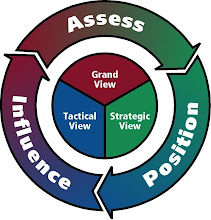
The ideal scenario can be likened to a sat-nav system. You always want to know three things: where you are, where you are going and how to get there. If the destination changes, a good sat-nav will recalculate the route to get to the new goal. It is the ability to show the complete current situation that is key to this, and the same applies to managing the IT portfolio.
There is a general consensus that IT spend falls into two broad pots, maintenance and support of fundamental systems, and providing real business value through innovative projects. The challenge for many IT departments is to maximise the budget and resource available for value-adding innovation without sacrificing the essential work needed to 'keep the lights on'. If you like, IT needs to be more selective in terms of the projects and initiatives that are undertaken. Anything that doesn't align to the top line business objectives should be de-prioritised or scrapped altogether. That's easy to say but very hard to do in practice, largely due to the difficulty that many companies have in matching initiatives to specific business goals. We found that in 60pc of the businesses surveyed, less than half of their initiatives were considered to be strategic. In only a third of cases was alignment with business objectives used as a measure of success.
The concept of business and IT alignment isn't new, and many industry commentators have views on why and how it can be achieved — some of which are quite detached from the reality of modern enterprise IT environments. In its simplest sense, it is making sure that IT projects reflect, and are geared towards, the longer term view of the business. To do this, there is a need for a mechanism to measure the alignment between IT project and business strategy.
As the demands and level of accountability increase, the environment becomes ever more complex and the goals of the business evolve, making the job of CIO tougher and tougher. Project portfolio management can provide some much needed support, particularly in terms of providing that 'sat-nav' view of where the IT operation is, where it's going, and how it should get there.
Rather than just pondering why IT projects over-run, we should deal with the broader issue of changing the attitude of both the IT department and the business as a whole towards a strategic approach for managing initiatives. Project portfolio management can provide a good catalyst for this change, but the underlying acceptance that projects do and will go over budget has to change if IT is going to have a credible voice in the boardroom.
By Frank Kennedy
http://www.siliconrepublic.com
# # #
Not everyone has an endless stream of money. ... Sun Zi Art of War highlights how uncontrollable costs slows down the progress of a campaign and create negative feeling within the organization.
If you are a company that wants to reduce their project costs and mitigate their risks, please contact us at service[aatt]collaboration360 [ddott]com.
Our process is designed to adapt to each and every tier of the corporate value chain (a marketing project, an IT project, etc.)
We will be more than happy to tell you more about our process and how it can help your company to operate efficiently while reducing costs.